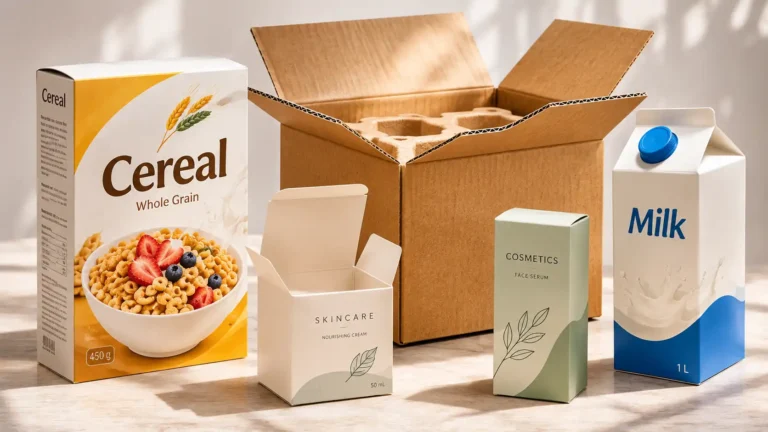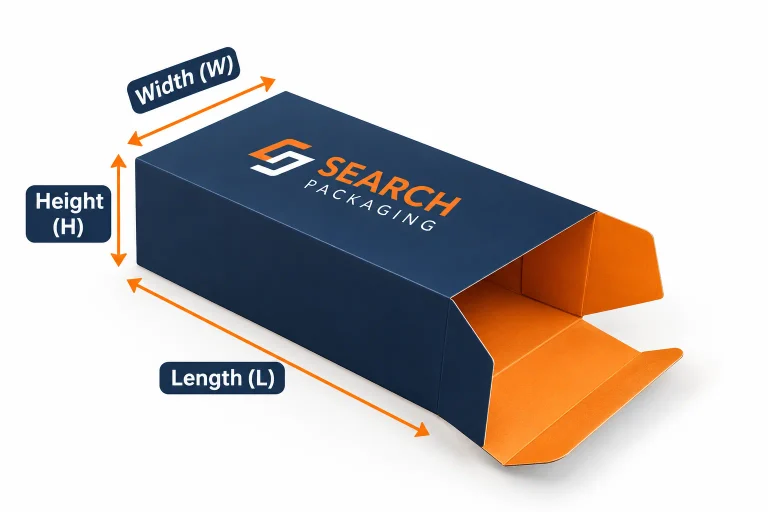
A cardboard box may look nothing like a tree, yet the two are closely connected. From grocery cartons to delivery boxes, cardboard is one of the most familiar packaging materials in everyday life. Its lightweight structure and surprising strength often raise questions about what goes into making it.
The answer lies in the fibers that form cardboard, how those fibers are processed, and the role recycled paper plays in modern manufacturing. Understanding these materials also explains why some cardboard bends easily while other types can support heavy products during shipping. This guide examines cardboard’s origins, composition, production process, and recyclability.
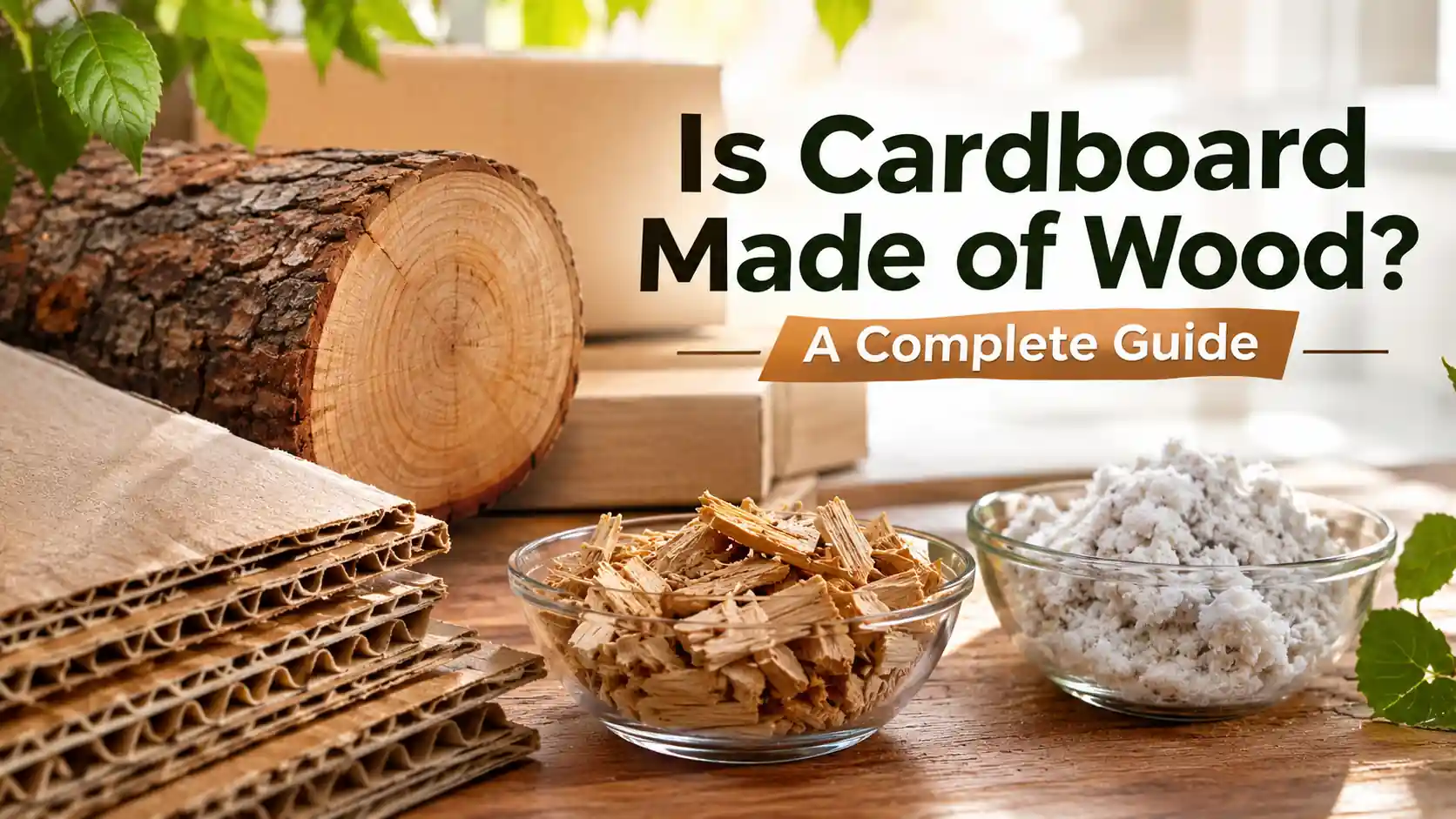
Is Cardboard Made of Wood?
Yes, cardboard is made primarily from cellulose fibers obtained from wood, recycled paper, or a combination of both. The wood is processed into pulp rather than used as solid timber. Manufacturers turn these fibers into paper sheets, which are then used to produce paperboard or corrugated cardboard.
Not every cardboard product contains newly processed wood. Some grades are manufactured using recovered paper fibers from previously used boxes and other paper products. However, those recycled fibers also originated largely from wood or other plant sources. This is why cardboard is considered a fiber-based material rather than a solid wood product.
What Is Cardboard Made Of?
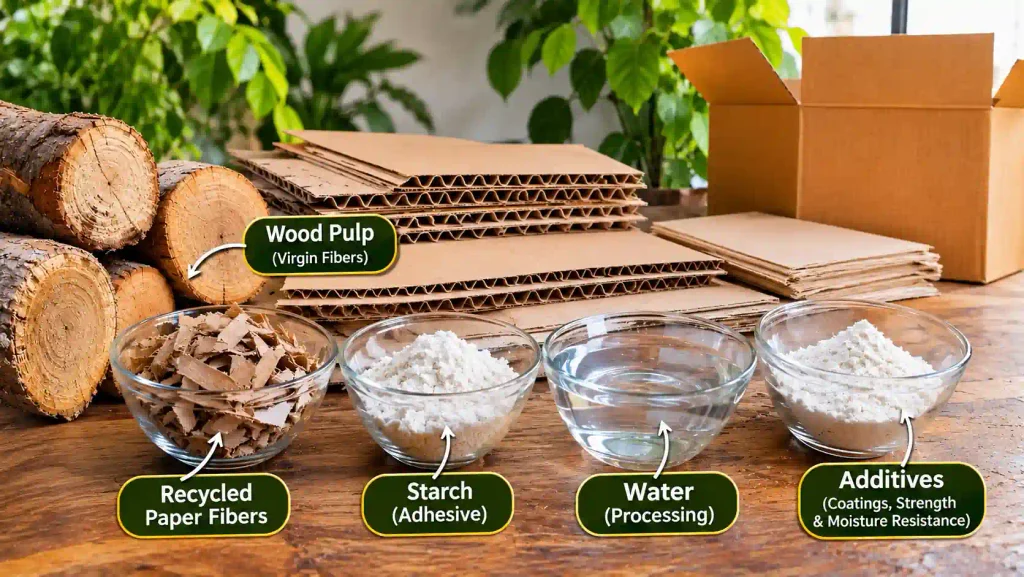
Cardboard raw materials vary according to the product’s intended use, but cellulose fibers are the main structural component. Other materials support manufacturing, bonding, printing, or moisture resistance.
| Material | Role in cardboard production |
| Virgin wood pulp | Supplies newly processed cellulose fibers |
| Recycled paper fibers | Reuses fibers recovered from paper products |
| Water | Carries and distributes fibers during papermaking |
| Starch adhesive | Bonds corrugated layers together |
| Additives and coatings | Modify surface finish or performance when required |
Cellulose Fibers
Cellulose is a natural structural component of plant cell walls. In cardboard, networks of cellulose fibers form the paper sheets that give the material its shape and strength. The properties of these fibers influence how well the finished board resists tearing, bending, and other forces.
Wood Pulp
Wood pulp is produced by separating usable fibers from wood. The process removes or modifies other components, including lignin, depending on the pulping method. The resulting fibers can be made into packaging papers such as linerboard, which forms the flat surfaces of corrugated cardboard.
Recovered Paper
Used cardboard boxes and other suitable paper products can be collected and processed into recycled pulp. This allows manufacturers to reuse existing fibers instead of relying exclusively on virgin wood pulp. The recycled content of cardboard varies by grade and producer.
Adhesives and Other Ingredients
Corrugated cardboard typically uses starch-based adhesive to attach its fluted middle layer to the linerboards. Certain paperboard products may also contain sizing agents, pigments, printing inks, or coatings. These ingredients serve specific purposes and are not present in identical amounts across all cardboard grades.
Does Cardboard Come From Trees?
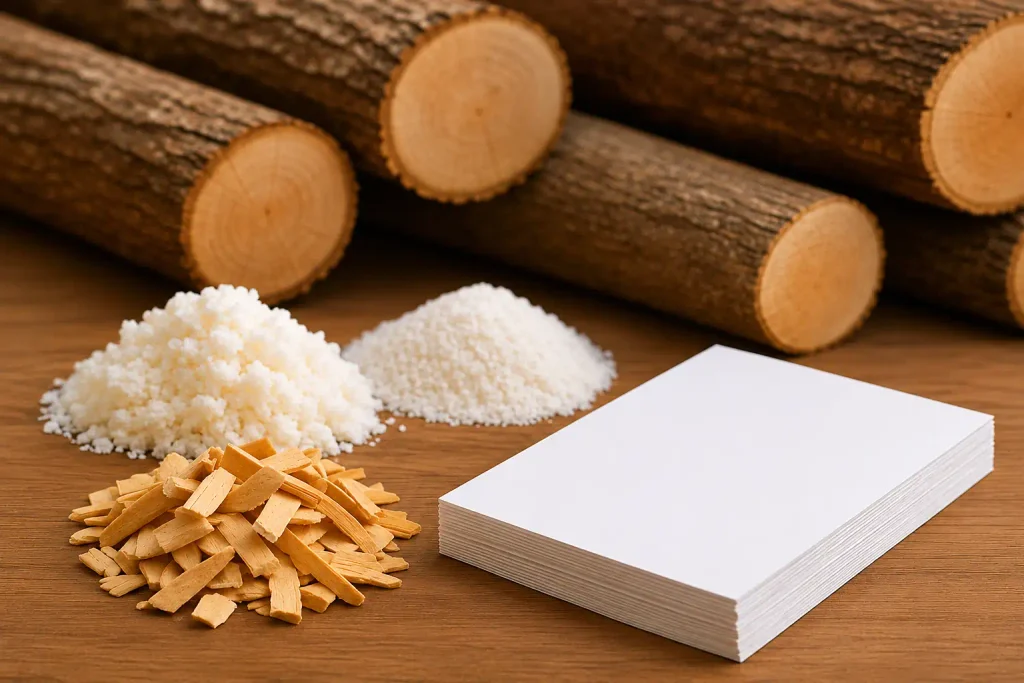
Cardboard made from virgin pulp comes from trees. Manufacturers use wood fibers from softwood and hardwood species, sometimes combining them to achieve particular strength or surface properties. The source is not always a newly harvested whole tree. Wood chips, sawmill residues, and other suitable wood-processing materials may also supply fiber.
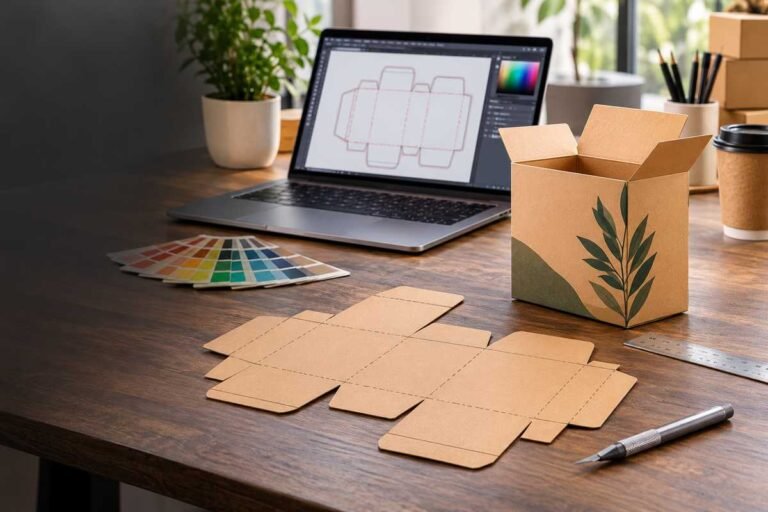
Cardboard made from recovered paper uses fibers that have already been processed into paper products. This reduces the need for additional virgin fiber in that production run. During packaging design, understanding the dieline also helps ensure the recycled cardboard is cut, folded, and assembled into the intended box structure.
What Types of Wood Are Used to Make Cardboard?
Softwood vs. Hardwood Fibers
Both softwood and hardwood fibers are used in cardboard manufacturing.
Longer Fibers
Pine • Spruce • Fir
Can contribute to strength and tear resistance.
Shorter Fibers
Birch • Eucalyptus • Aspen
Can improve sheet formation and surface smoothness.
Different tree species provide fibers with different characteristics.
| Wood category | Common examples | General fiber characteristics |
| Softwood | Pine, spruce, fir | Longer fibers that can contribute to tensile and tear strength |
| Hardwood | Birch, eucalyptus, aspen | Generally shorter fibers that can support sheet formation and surface smoothness |
Softwood pulp is particularly useful in packaging papers where strength matters. Hardwood fibers can help produce a more uniform sheet with suitable printing characteristics.
The final properties depend on the fiber blend, pulping method, refining, and papermaking process, not simply the tree species.
How Is Cardboard Made From Wood?
How Wood Becomes Cardboard
Four steps from wood fibers to packaging
Wood
Wood chips supply fresh cellulose fibers.
Pulp
Fibers are separated, cleaned, and prepared.
Paper Sheets
Pulp is formed, pressed, and dried into paper.
Cardboard
Paper layers are processed into packaging board.
The cardboard manufacturing process begins with preparing cellulose fibers and ends with forming the required paperboard or corrugated structure.
1. Preparing Wood or Recovered Paper
For virgin pulp, logs are generally debarked and reduced to wood chips. The chips are prepared for a pulping process that separates their fibers. Recycled paper follows a different preparation route. Recovered material is sorted and processed so usable fibers can be separated from unwanted components.
2. Converting Raw Materials Into Pulp
Pulping releases the fibers needed to manufacture paper. In chemical pulping, chemicals help separate cellulose fibers from lignin and other wood components. The kraft process is an important example used for strong packaging papers. Mechanical pulping uses physical energy to separate fibers and generally retains more of the wood’s original components. Recovered paper is repulped by mixing it with water and mechanically separating the fibers.
3. Cleaning and Refining
The pulp is screened and cleaned before sheet formation. Recovered paper may require additional processing to remove contaminants. Refining and fiber blending help manufacturers achieve the characteristics required for different packaging grades. Not all cardboard is bleached. Many brown packaging papers use unbleached pulp, while some white paperboard grades require additional processing.
4. Forming and Drying Paper Sheets
The prepared pulp is diluted with water and distributed across a moving screen on a paper machine. As water drains away, fibers form a continuous sheet. Pressing and heated drying remove additional moisture. The finished paper may be wound into large rolls for further processing.
5. Creating the Cardboard Structure
The next stage depends on the type of cardboard being produced. Paperboard is manufactured as a relatively thick, stiff paper-based sheet. For corrugated cardboard, a separate paper sheet passes through corrugating rollers that create a repeating wave pattern called fluting. The fluted sheet is bonded to one or more flat linerboards using adhesive. This creates a lightweight structure with greater bending stiffness than a comparable flat sheet.
6. Converting Board Into Packaging
Finished boards can be printed, cut, scored, folded, and glued into cartons or boxes. The final construction depends on the product’s dimensions, weight, handling requirements, and intended use.
Is Cardboard Made From Wood or Recycled Paper?
Cardboard can contain virgin fibers, recycled fibers, or both. The distinction is based on the source and processing history of the cellulose.
- Virgin fibers come from wood or other suitable plant material that has not previously been manufactured into paper.
- Recycled fibers come from recovered paper products that are processed for reuse.
| Factor | Virgin fiber | Recycled fiber |
| Origin | Newly processed plant material | Previously manufactured paper |
| Processing | Pulping of raw fiber material | Repulping and cleaning |
| Main advantage | Supplies fresh fibers with useful strength characteristics | Extends the useful life of existing fibers |
| Main limitation | Requires fresh fiber resources | Fibers can lose quality through repeated processing |
Manufacturers select fiber combinations based on product specifications, available resources, and manufacturing requirements.
Recycled fibers can be used successfully in many packaging grades, but they cannot be recycled indefinitely without losses. Fibers may become shorter or damaged, and some material is lost during collection and processing. This is one reason the paper industry continues to use both recovered and virgin fibers.
Is Cardboard Made of Paper?
Yes. Cardboard is a paper-based material, although the term describes several different products. Ordinary paper is generally thin and flexible. Cardboard is typically thicker, stiffer, or constructed from multiple paper layers. The packaging industry uses more precise terminology because paperboard and corrugated fiberboard have different structures and applications.
Paperboard vs. Corrugated Cardboard
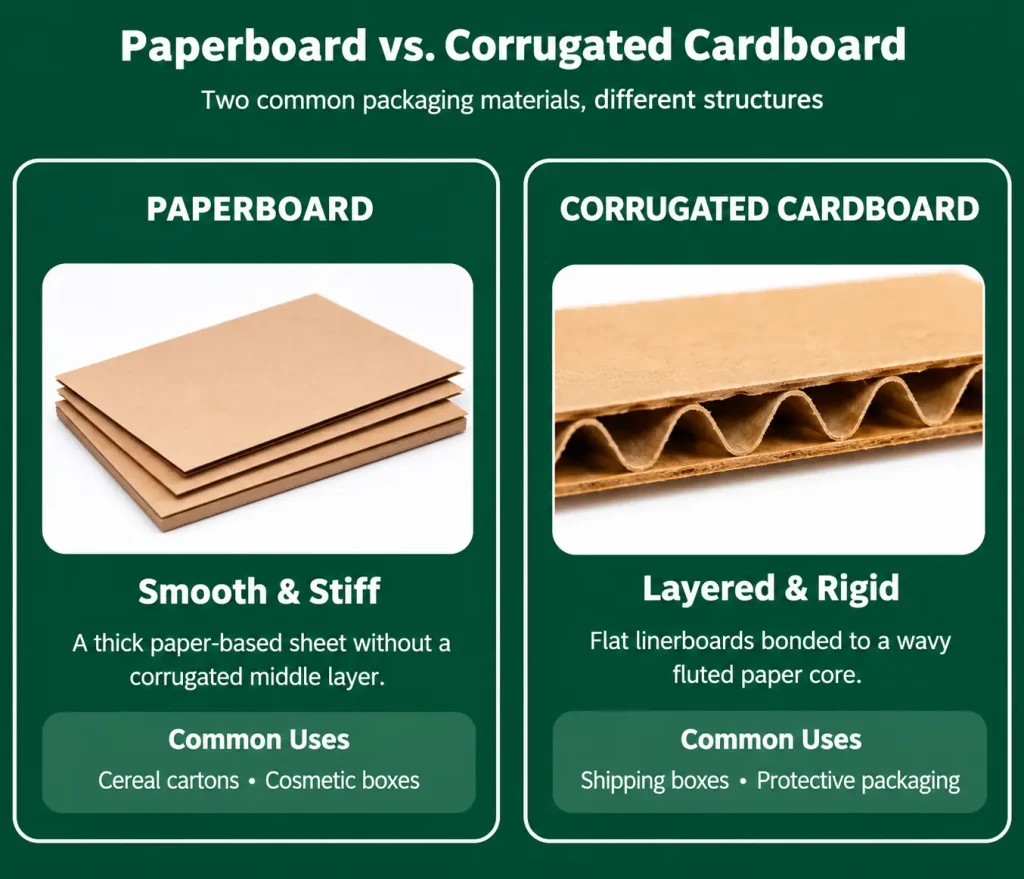
| Feature | Paperboard | Corrugated cardboard |
| Structure | Thick paper-based sheet | Flat liners bonded to fluted paper |
| Typical appearance | Smooth and relatively thin | Layered with a visible wavy core |
| Common applications | Cereal cartons, cosmetic boxes | Shipping boxes, protective packaging |
| Main strength characteristic | Sheet stiffness | Structural rigidity and compression resistance |
| Common packaging form | Folding carton | Corrugated box |
Paperboard is appropriate for many lightweight retail products. Corrugated cardboard is commonly selected when the package needs greater structural support. Neither material is universally better. Their suitability depends on the product and distribution conditions.
Why Is Corrugated Cardboard Strong?
Corrugated cardboard combines the strength of paper fibers with an engineered layered structure. The flat linerboards provide surfaces that resist bending and other forces, while the fluted medium maintains separation between them. This arrangement increases bending stiffness and helps the board withstand certain compression loads without requiring a solid block of material. Corrugated packaging is manufactured in several constructions, including single-wall, double-wall, and triple-wall board.
However, more layers do not automatically guarantee suitable performance. Strength also depends on board grade, flute design, box dimensions, adhesive quality, and moisture exposure. For shipping applications, manufacturers may use tests such as the Edge Crush Test (ECT) to evaluate board performance. Cardboard can also weaken when exposed to excessive moisture, so storage conditions and appropriate material selection matter.
Does Making Cardboard Require Cutting Down Trees?
Cardboard manufacturing requires cellulose fibers, but producing every new box does not necessarily require newly harvested wood. Virgin pulp uses fresh fiber resources, which may include harvested wood and suitable wood-processing residues. Recycled cardboard uses fibers recovered from earlier paper products.
The environmental implications depend on how fiber is sourced and managed. Responsible forestry involves maintaining productive forest resources while considering environmental and social requirements. Certification systems such as FSC and PEFC can provide information about certain forest-management and chain-of-custody practices.
However, certification claims should only be made when the specific product or supply chain meets the relevant requirements. Recycling reduces demand for virgin fiber in suitable applications, but fresh fibers remain part of the broader manufacturing system.
Is Cardboard Recyclable?
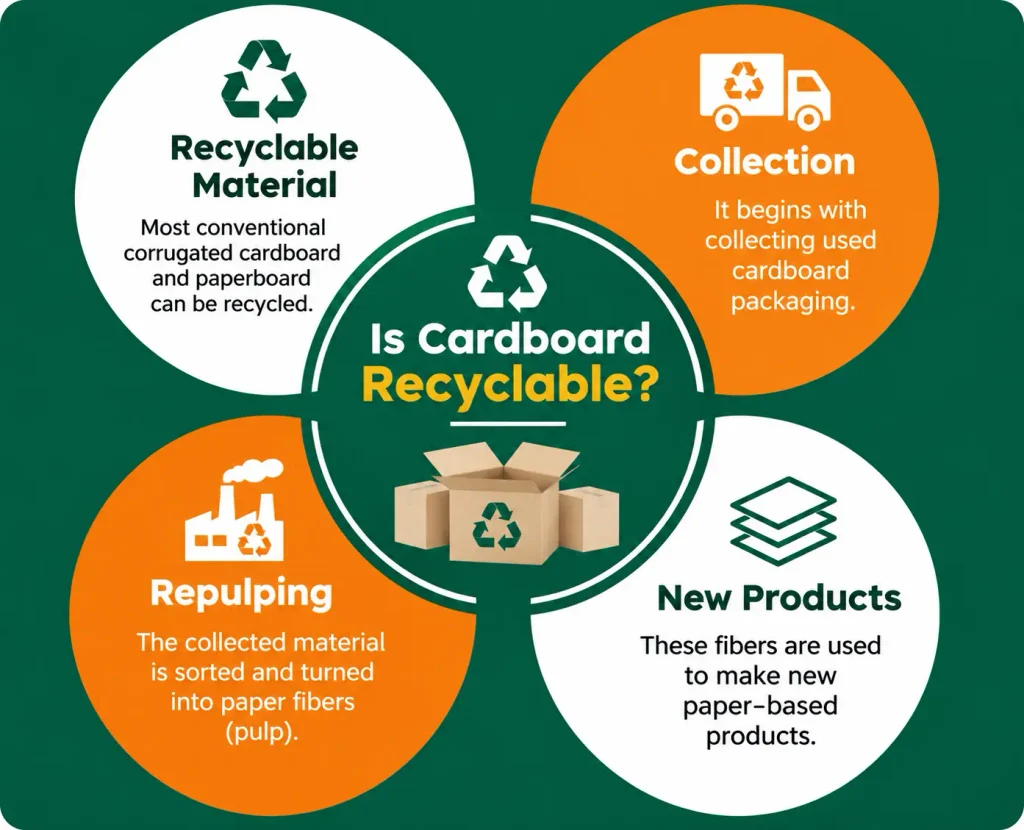
Most conventional corrugated cardboard and paperboard can be recycled, although acceptance depends on the material and local recycling services. Cardboard recycling begins with collecting used packaging, separating suitable material, and repulping it into fibers. These fibers are then used to manufacture new paper-based products.
How Much Cardboard Is Recycled in the United States?
According to the American Forest & Paper Association, the U.S. cardboard recycling rate was approximately 70%–75% in 2025. The organization also reported that more than 33 million tons of cardboard were recycled during the year.
Nearly half of the recovered paper collected in the United States went into producing containerboard, the paper material used to manufacture corrugated boxes. These figures demonstrate the importance of recovered fibers in U.S. packaging production.
Source: American Forest & Paper Association — 2025 U.S. Paper Recycling Rates
What Happens to Cardboard After Recycling?
Recovered cardboard is broken down into fibers, cleaned, and made into new paper products. Some fibers may be reused several times, but repeated processing gradually affects fiber quality. Manufacturers compensate through fiber selection, blending, and the addition of virgin pulp when necessary.
Can Every Cardboard Box Be Recycled?
No. Most ordinary cardboard boxes are widely recyclable, but specialized coatings, laminations, and certain contaminants can affect processing. Regular shipping labels and small amounts of tape generally do not prevent cardboard recycling. Local programs may have different collection requirements.
For a broader explanation of how packaging materials behave after disposal, read our guide to biodegradable packaging materials and their limitations.
Is Cardboard Environmentally Friendly?
Cardboard has several characteristics that make it useful in efforts to reduce packaging waste. Its cellulose fibers come from renewable plant resources, and conventional cardboard has an established recycling system. However, cardboard is not automatically the most environmentally responsible option in every situation.
Its environmental performance depends on:
- Fiber sourcing and forest management
- Recycled content
- Energy and water consumption
- Packaging weight and material efficiency
- Product protection
- Transportation
- End-of-life collection and recycling
For example, an unnecessarily large cardboard box can consume more material and shipping space than a correctly sized alternative.
A more efficient package uses enough material to protect its contents without creating avoidable waste.
Businesses evaluating the financial impact of packaging choices can also consult our custom packaging cost guide, which explains how material, box construction, and dimensions influence overall packaging expenses.
How Can You Tell What a Cardboard Box Is Made Of?
The appearance and construction of a box can provide clues, although they cannot confirm its exact fiber composition. A brown corrugated shipping box typically contains flat linerboards and a fluted middle layer. A cereal carton usually consists of paperboard without a corrugated core.
The color does not reliably identify the amount of recycled fiber. Brown packaging is not necessarily 100% recycled, and white paperboard is not necessarily made entirely from virgin pulp. To confirm material composition, look for a manufacturer’s specifications or documented recycled-content claims. The most useful details include the board grade, fiber composition, coating type, and any applicable certification.
Final Thoughts
Cardboard’s connection to wood begins with cellulose fibers. Whether those fibers come from freshly processed trees or recovered paper, they form the foundation of the paperboard and corrugated materials used in modern packaging.
The manufacturing process determines how the fibers become strong, lightweight sheets, while corrugated construction provides additional structural support for shipping boxes.
Understanding where cardboard comes from also makes it easier to evaluate recycled content, material performance, and environmental claims. At Search Packaging, we believe the key is not simply whether cardboard contains wood, but how its fibers are sourced, processed, and used throughout the packaging lifecycle.
Frequently Asked Questions
What Are the Different Types of Cardboard?
The main types are paperboard, corrugated cardboard, and chipboard. Paperboard is used for retail cartons, corrugated cardboard for shipping boxes, and chipboard for lightweight packaging. Corrugated cardboard also comes in single-wall, double-wall, and triple-wall constructions for different strength and protection needs.
Is Cardboard Made of Wood?
Yes. Cardboard is made primarily from cellulose fibers originating from wood, recycled paper, or a combination of both. The wood is processed into pulp rather than used as solid timber.
What Is Cardboard Actually Made Of?
Cardboard mainly consists of cellulose fibers. Corrugated cardboard also contains adhesive that bonds its paper layers, while some products include coatings or additives.
What Kind of Wood Is Used to Make Cardboard?
Common sources include softwoods such as pine, spruce, and fir, along with hardwoods such as birch and eucalyptus. Manufacturers select fibers according to the required board properties.
Is Cardboard Made From Recycled Paper?
Yes. Recovered paper is an important raw material for cardboard manufacturing. The recycled content varies depending on the grade and manufacturer.
How Do Trees Become Cardboard?
Wood is processed into pulp, formed into paper sheets, pressed, and dried. For corrugated cardboard, a paper sheet is fluted and bonded to flat linerboards.
Is Cardboard the Same as Paper?
Cardboard is a paper-based material, but it is generally thicker, stiffer, or structurally reinforced compared with ordinary paper.
Packaging Expert & Industry Writer