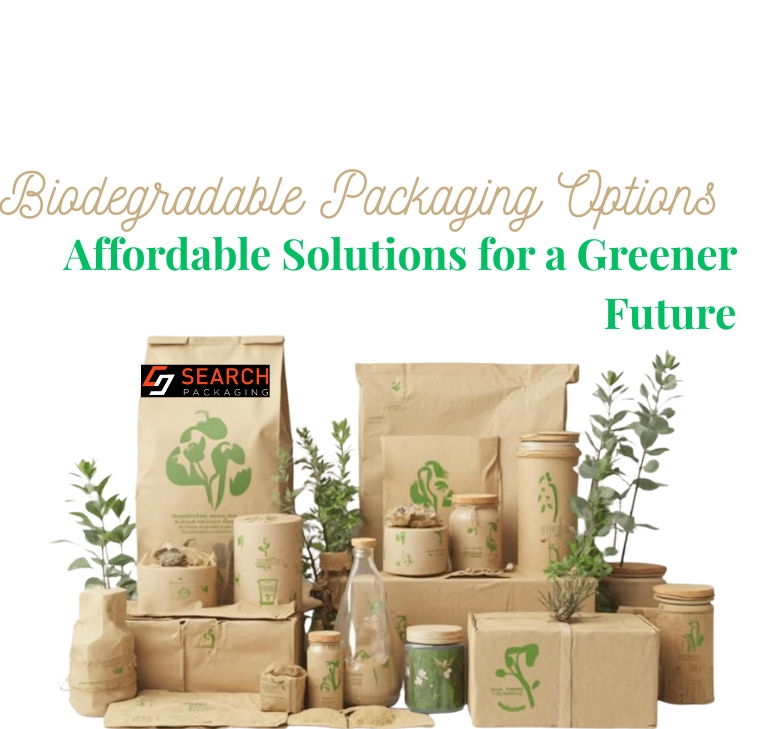
The most affordable biodegradable packaging options for most brands are paper based: kraft paperboard, corrugated cardboard, SBS paperboard, recycled paperboard, and paper mailers. They break down naturally, they are accepted in most curbside recycling programs across the USA, and they cost far less than plant based plastics, mushroom packaging, or seaweed films.
Quick answer:
- Cheapest overall: recycled paperboard and kraft paper
- Best for shipping: corrugated cardboard boxes and padded paper mailers
- Best plastic free cushioning: honeycomb paper, crinkle paper, and molded pulp
- Worth the extra cost only in specific cases: mushroom packaging, PLA, bagasse, and seaweed films
Customers judge your package before they open it. A box that feels natural and honest tells them you care about the same things they do. A plastic mailer stuffed with air pillows tells them the opposite.
This guide compares 12 biodegradable packaging options by cost, strength, and breakdown time. You will also learn what “biodegradable” means under federal rules, which claims you can legally print, and how to switch without raising your packaging budget. Facts on labeling, recycling, and composting come from the Federal Trade Commission (FTC), the Environmental Protection Agency (EPA), ASTM International, and CalRecycle.
What Does Biodegradable Packaging Actually Mean?
Biodegradable packaging is packaging that bacteria and fungi can break down into water, carbon dioxide, and natural matter without leaving harmful residue behind.
The word also has a legal meaning in America. The FTC’s Green Guides say a brand should only make an unqualified biodegradable claim if the entire package will completely break down and return to nature within one year after customary disposal. Because most trash in the United States goes to landfills, where there is too little air, moisture, and microbial activity for fast breakdown, the FTC warns against unqualified biodegradable claims for items that usually end up there.
That is why the smartest biodegradable packaging options are the ones customers can also recycle or compost. Paper packaging does both.
Biodegradable vs Compostable vs Recyclable: What Is the Difference?
These three labels are often used as if they mean the same thing. They do not.
| Label | What it means | Standard or rule | Example |
| Biodegradable | Microbes can break it down over time | FTC Green Guides (one year rule for unqualified claims) | Kraft paperboard box |
| Industrially compostable | Breaks down in a commercial compost facility with high heat | ASTM D6400 (plastics) or ASTM D6868 (coated paper) | PLA cup, certified compostable mailer |
| Home compostable | Breaks down in a backyard compost pile | No federal standard; brands often use European home compost certifications | Mushroom packaging, plain paper |
| Recyclable | Can be collected and made into new material | FTC Green Guides; California SB 343 for products sold there | Corrugated shipping box |
Under ASTM D6400, a compostable product must physically break apart within 12 weeks and convert at least 90 percent of its carbon within 180 days in an industrial compost facility. Every compostable product is biodegradable, but not every biodegradable product is compostable, and “industrially compostable” means very little if the customer has no compost facility nearby.
What Are the Most Affordable Biodegradable Packaging Options?
Here is how the 12 most common biodegradable packaging options compare. Cost levels are relative, because the real price depends on size, quantity, and printing.
| Option | Relative cost | Main job | End of life for the customer |
| Recycled paperboard boxes | Lowest | Light retail items, sleeves, inserts | Curbside recycling or compost |
| Kraft paper and kraft paperboard | Low | Retail boxes, wrapping, bags | Curbside recycling or compost |
| Crinkle paper and kraft void fill | Low | Filling empty space | Curbside recycling or compost |
| Honeycomb paper wrap | Low | Replacing bubble wrap | Curbside recycling or compost |
| Kraft paper mailers | Low | Shipping soft goods and flat items | Curbside recycling |
| Corrugated cardboard boxes | Low to medium | Shipping, heavy and fragile items | Curbside recycling or compost |
| Cornstarch packing peanuts | Low to medium | Loose fill cushioning | Dissolves in water or home compost |
| SBS paperboard boxes | Medium | Cosmetics, skincare, gifts | Curbside recycling if unlaminated |
| Molded pulp inserts and trays | Medium | Protecting bottles, electronics, eggs | Curbside recycling or compost |
| Compostable poly mailers | Medium to high | Waterproof shipping for apparel | Industrial or home compost, depending on certification |
| Bagasse containers | Medium to high | Food service and takeout | Industrial compost |
| Mushroom packaging | high | Custom molded protection | Home compost |
Paper based materials fill the top of this list for one reason: the country already has a huge system for making and recycling them, so they are cheap to buy in small quantities and easy for customers to throw away correctly.
Paper Boxes: The Best Value Biodegradable Packaging Options
Four paper boards cover almost every product a small business sells.
Kraft Paperboard Boxes
Kraft is the brown, natural board most people picture when they think of eco friendly packaging. It goes through less bleaching, so it keeps the wood’s natural color and much of its strength. Kraft works well for soap, candles, tea, snacks, and handmade goods. Dark inks on kraft give a warm, rustic look, while white ink on kraft makes a simple logo stand out.
Corrugated Cardboard Boxes
Corrugated board has a wavy middle layer, called the flute, glued between two flat liners. That structure makes it the top choice for ecommerce because it protects heavy and fragile items through the whole shipping journey. It is also the most recycled packaging material in the country. According to EPA data, the recycling rate for corrugated boxes reached 96.5 percent in 2018.
Thinner E flute and F flute boards work well for small, printed mailer boxes, while B flute and C flute boards suit heavier shipping cartons.
SBS Paperboard Boxes
Solid bleached sulfate (SBS) is a smooth, bright white board. It gives the sharpest print quality, which is why cosmetic, skincare, and gift brands prefer it. It is still paper, so it recycles and breaks down like other board, as long as you skip plastic film lamination.
Recycled Paperboard Boxes
Recycled board is made from recovered paper fiber. It is usually the lowest cost board and works well for lightweight retail items, sleeves, and inserts. The surface is a little less smooth than SBS, so bold, simple designs look best on it.
How Do the Four Paper Boards Compare?
| Board | Relative cost | Strength | Print look | Best for |
| Recycled paperboard | Lowest | Light | Matte, slightly textured | Light retail items, sleeves, inserts |
| Kraft paperboard | Low | Medium | Natural brown, earthy | Soap, candles, tea, snacks |
| SBS paperboard | Medium | Medium | Bright and sharp | Cosmetics, skincare, gifts |
| Corrugated cardboard | Low to medium | High | Clean, good for bold prints | Shipping, ecommerce, heavy items |
Price matters, but protection matters more. A cracked candle or a leaking bottle costs you far more than the box ever will.
Which Biodegradable Mailers and Bags Work Best?
Not every product needs a box. Mailers are among the lightest biodegradable packaging options, and for apparel, books, and flat items they are cheaper to ship than a box.
Kraft paper mailers are the most affordable option. They are made from strong kraft paper, often with a peel and seal strip, and they go straight into the recycling bin.
Padded paper mailers replace bubble lined envelopes. The cushioning is made from paper instead of plastic bubbles, so the whole mailer can be recycled with paper.
Compostable poly mailers look and feel like plastic but are made from plant based materials such as PLA blended with PBAT. They are water resistant, which makes them useful for clothing. The catch: many are certified only for industrial composting, so check whether the mailer carries a home compost certification before you advertise it as compostable.
Glassine bags are thin, smooth paper bags that resist grease and air. They are a good plastic free choice for small items such as jewelry, stickers, and baked goods.
What Are the Best Plastic Free Cushioning and Void Fill Options?
A green box filled with foam peanuts is not a green package. Cushioning is where most brands still hide plastic, and it is also where some of the cheapest biodegradable packaging options live.
- Honeycomb paper wrap is kraft paper cut in a pattern that expands into a 3D cushion. It is the easiest swap for bubble wrap around bottles and glass jars.
- Crinkle paper fills empty space and makes an unboxing look finished. It works best for gift sets and subscription boxes.
- Cornstarch packing peanuts protect items like foam peanuts do, but they dissolve in water. Customers can rinse them down the sink or add them to compost.
- Molded pulp is made from recycled paper or plant fiber pressed into custom shapes. It holds bottles, electronics, and fragile items firmly in place.
- Mushroom packaging is grown from mycelium and farm waste into a custom mold. It is strong and home compostable, but it costs more and usually needs longer lead times.
Are Plant Based Plastics and Newer Materials Worth the Price?
Sometimes, but not for most small brands. Newer biodegradable packaging options solve specific problems that paper cannot, such as holding liquids or blocking moisture.
PLA (polylactic acid) is a plastic made from corn or sugarcane. It looks like regular plastic and is used for windows, cups, and film. PLA needs the high heat of an industrial compost facility, it will not break down in a backyard pile, and it contaminates regular plastic recycling if customers put it in the wrong bin.
Bagasse is sugarcane fiber left over after juice extraction. It is molded into takeout containers and trays and handles hot, greasy food well. It is a strong choice for restaurants, but less useful for printed retail packaging.
Seaweed packaging can be edible or dissolvable and is used for sachets and liquid pods. It is still an early stage material, so it costs more and is hard to order in small quantities.
Our take: start with paper, then add a newer material only where paper cannot do the job, such as a waterproof mailer or a food container.
How Long Does Each Material Take to Break Down?
How fast biodegradable packaging options break down depends on its thickness, any coatings, and whether it ends up in compost, soil, or a landfill.
| Material | Typical breakdown time in compost | What slows it down |
| Shredded paper and thin kraft | About 2 to 6 weeks | Dry piles that are never turned |
| Cornstarch packing peanuts | Minutes in water, weeks in compost | Keeping them dry |
| Mushroom packaging | About 1 to 2 months in home compost | Large, unbroken pieces |
| Molded pulp and bagasse | About 2 to 3 months | Thick walls and dry conditions |
| Plain corrugated boxes | About 2 to 6 months | Thick walls, boxes left whole |
| PLA and compostable mailers | About 3 to 6 months in an industrial facility | Home compost piles never get hot enough |
| Wax coated cartons | Up to about 3 years | Wax keeps out water and microbes |
| Plastic lined cartons | Paper breaks down, plastic stays | The plastic layer never fully biodegrades |
These are typical ranges based on public composting guidance and manufacturer data, not guarantees. Tearing packaging into small pieces and keeping compost damp speeds things up a lot.
Which Biodegradable Packaging Option Fits Your Product?
Choose among these biodegradable packaging options based on how your product is sold and shipped. Use this table as a quick starting point.
| Product type | Packaging style | Material | Insert or cushioning |
| Bar soap | Tuck end box or sleeve | Kraft paperboard | None needed |
| Tea and coffee | Tuck end or two piece box | Kraft paperboard | Glassine inner bag |
| Skincare and serums | Tuck end box | SBS paperboard | Paperboard or molded pulp insert |
| Jewelry | Two piece box | Kraft or SBS paperboard | Die cut paperboard insert |
| Candles in glass jars | Mailer box | Corrugated cardboard | Paperboard divider or honeycomb wrap |
| Apparel | Mailer | Kraft paper mailer or compostable mailer | Tissue paper |
| Books and prints | Rigid mailer | Kraft paper or corrugated mailer | None needed |
| Subscription boxes | Mailer box | Corrugated cardboard | Paperboard partitions and crinkle paper |
| Wine and glass bottles | Shipping box | Corrugated cardboard | Molded pulp bottle insert |
| Electronics accessories | Mailer box | Corrugated cardboard | Die cut corrugated or molded pulp insert |
| Takeout food | Clamshell or tray | Bagasse or grease resistant paperboard | None needed |
Paper inserts keep the whole package paper based. Your customer does not have to pull out foam before recycling, and that small detail gets noticed.
Do Printing, Coatings, and Adhesives Affect Biodegradability?
Yes, and the finish matters more than the ink. Plastic film lamination bonds a thin layer of plastic to the board. That layer will not biodegrade, and it can make the box harder to recycle.
| Finish or add on | Keeps the package easy to recycle and break down? |
| No coating | Yes |
| Water based (aqueous) coating | Generally yes, because the layer is thin and water based |
| Spot varnish on small areas | Usually fine in small amounts |
| Gloss or matte film lamination | No |
| Foil stamping | Small areas are usually accepted, large foil areas can cause problems |
| Plastic window | No, unless the customer removes it |
| Grease resistant coating with PFAS | No, and several states now restrict PFAS in packaging |
A few easy habits keep your whole package green:
- Choose an uncoated or water based finish instead of film lamination.
- Seal boxes with paper tape or water activated gummed tape instead of plastic tape.
- Use paper labels and stickers.
- Skip plastic windows, or use a simple die cut opening instead.
- Ask your supplier for PFAS free grease resistance on any food packaging.
How Much Do Biodegradable Packaging Options Cost?
Most custom paper boxes cost a few dollars or less each, and simple kraft or recycled board boxes ordered in larger runs can drop below a dollar per box. Specialty materials such as mushroom packaging and seaweed films cost noticeably more per unit.
The exact price depends on five things:
- Quantity: more units lower the price of each one.
- Size: bigger packaging uses more material.
- Material: recycled and kraft board usually cost less than SBS, and paper costs less than PLA or mycelium.
- Printing: full color inside and out costs more than a one color logo.
- Extras: inserts, windows, and special finishes add to the price.
Look at the Total Cost, Not Just the Unit Price
The box price is only part of the bill. Carriers such as UPS and FedEx charge by dimensional weight, so a box that is too big for its product costs more to ship even when it is light. Switching to a box that fits closely often saves more on shipping than it costs in materials. Lighter paper void fill can also cut shipping weight compared with heavier protective options.
To save more, pick a standard box style, keep your design to two or three colors, and choose kraft or recycled board. You still get a branded package that looks great on a shelf or a doorstep.
What Eco Claims Can You Legally Print on Packaging?
Only print claims you can prove, and say exactly which part of the package the claim covers. The FTC treats vague or false green claims as deceptive marketing, so a clear claim protects your brand as well as the planet. Even the best biodegradable packaging options lose customer trust when the label oversells them.
Federal Rules: The FTC Green Guides
The Green Guides apply nationwide. They say:
- An unqualified “biodegradable” claim needs proof that the whole package breaks down within one year after customary disposal.
- A “compostable” claim should say whether it means home or industrial composting if composting facilities are not widely available.
- A “recyclable” claim should be qualified if recycling programs for that material are not available to a substantial majority of customers.
- Broad claims like “eco friendly” or “green” with no explanation are hard to prove and should be avoided.
State Rules: California Goes Further
California has some of the strictest packaging claim laws in the country:
- Plastic products cannot be labeled “biodegradable” or “degradable” under California law, even if they are made from plant based plastic.
- SB 343 (Truth in Recycling) limits the chasing arrows symbol and “recyclable” claims to packaging that meets state recyclability criteria, for products manufactured after October 4, 2026. In July 2026, a federal court blocked the California Attorney General from enforcing it while a lawsuit continues, but other enforcement paths may still apply. If you sell into California, have your labels reviewed.
Plain paperboard and corrugated boxes are among the easiest packages to label honestly, because they are widely recycled across America.
Certifications Customers Recognize
- BPI certified compostable: confirms a product meets ASTM D6400 or D6868 for industrial composting in North America.
- How2Recycle label: gives customers clear, material specific disposal instructions.
- Home compost certification: confirms a product breaks down in a backyard pile, not just an industrial facility.
Write Claims That Hold Up
- Write “Made from paperboard. Please recycle.” instead of a vague “Eco friendly.”
- If the box has a plastic window, say the box is recyclable once the window is removed.
- Only call a package compostable if it is certified, and say whether it is home or industrial compostable.
- Add one short line telling customers how to dispose of the package.
A short, honest line builds more trust than a big green leaf icon with nothing behind it.
How Do You Switch to Biodegradable Packaging Without Raising Costs?
Start with the packaging you use most and move it to one of the biodegradable packaging options above first. Switching everything at once is where costs jump.
- List your current packaging. Write down every box, mailer, filler, tape, and label you use, and how many you go through each month.
- Replace the biggest item first. For most ecommerce brands that is the shipping box or mailer, so move it to corrugated board or a kraft paper mailer.
- Swap the small extras. Change plastic tape, foam fillers, and plastic labels to paper versions. These cost little and remove most of the plastic from each order.
- Right size your packaging. A box that fits your product closely uses less board, needs less filler, and often costs less to ship.
- Order samples and test. Ship a few sample packages to yourself or a friend and check for crushed corners, scuffs, or damage before placing a full order.
- Tell your customers. Add one clear disposal line so the new packaging actually gets recycled or composted.
Paper packaging in the United States is easy to source at almost any order size, so a step by step switch keeps your budget steady while your Custom packaging gets greener.
What Mistakes Should You Avoid With Biodegradable Packaging?
- Choosing compostable plastic when paper would work. It usually costs more, and most customers have no industrial compost facility nearby.
- Mixing materials that cannot be separated. A paper box laminated with plastic film is neither fully recyclable nor fully biodegradable.
- Printing claims you cannot prove. “100% biodegradable” on a laminated box can trigger complaints and legal risk.
- Forgetting the filler. A kraft box packed with foam peanuts undoes the whole switch.
- Ignoring protection. A damaged product creates a second shipment, which doubles the waste and the cost.
Final Thoughts
Going green with your packaging does not have to be expensive or complicated. For most brands, the best biodegradable packaging options are already the simplest ones: kraft, corrugated, SBS, and recycled paperboard boxes, paired with paper mailers and paper cushioning.
These materials break down naturally, they are accepted in most recycling programs, and they cost less than newer specialty materials. Save plant based plastics, bagasse, and mushroom packaging for the jobs paper cannot do. Skip plastic lamination, use paper tape and paper inserts, size your packaging to fit, and print a clear, honest disposal line on every package.Start small. Replace the package you use most, see how customers respond, and build from there.
Frequently Asked Questions
Can biodegradable boxes go in the curbside recycling bin?
Yes. Plain paper and cardboard boxes are accepted in most curbside programs. Flatten them, keep them dry, and remove plastic tape or bubble wrap first. Check your city’s rules for greasy or wet cardboard.
Can I compost cardboard boxes at home?
Yes. Tear plain, uncoated cardboard into small pieces, mix it with green waste like food scraps or grass clippings, and keep the pile damp. Leave out glossy, laminated, or wax coated boxes.
Is bubble wrap biodegradable?
No. Standard bubble wrap is made from polyethylene plastic and does not biodegrade. Paper bubble wrap and honeycomb paper are the closest biodegradable replacements.
Are greasy pizza boxes compostable?
Usually, yes. Many compost programs accept greasy pizza boxes because food oil breaks down in compost, while many recycling programs reject them. Tear off any clean parts to recycle and compost the greasy sections.
Is biodegradable packaging waterproof?
Plain paper is not waterproof, so it softens when wet. Water based coatings add light moisture resistance, and compostable mailers made from plant based plastics resist water well enough for shipping clothing.
Is brown kraft better for the environment than white board?
Kraft usually goes through less bleaching, so many brands see it as the more natural choice. White SBS board still recycles and breaks down well. Pick the one that fits the look of your brand.
Do soy or vegetable inks make a box biodegradable?
No. The board is what breaks down, and ink is only a tiny part of the box. Lower chemical inks are a nice extra, but avoiding plastic lamination makes a much bigger difference.
Does FSC certified mean biodegradable?
No. The Forest Stewardship Council label means the wood fiber came from responsibly managed forests. It says nothing about how the finished package breaks down, although plain FSC paper usually is biodegradable.
How can I tell if a box has a plastic lining?
Tear a corner. If a thin, stretchy film peels away from the paper, the box is lined or laminated. Plain board tears cleanly and shows soft, fuzzy fibers at the edge.
Do biodegradable boxes fall apart on the shelf?
No. Paper boxes only break down with steady moisture, warmth, and microbes. In a dry warehouse or store, they stay strong for as long as you need them.