Handmade soap deserves packaging that looks good, protects the bar, and doesn’t create unnecessary waste. Whether you’re wrapping homemade soaps for gifts or preparing products for a small business, the right packaging should be practical, affordable, and attractive.
Some of the best eco-friendly soap packaging ideas include Kraft paper wraps, recycled cardboard boxes, paper sleeves, and reusable cotton bags. Each offers a different balance of protection, appearance, and material use. This guide explores 15 creative ways to package handmade soap, compares suitable materials, and explains how to choose packaging that fits your product and budget.
15 Creative and Eco-Friendly Soap Packaging Ideas
1. Kraft Paper Soap Wraps
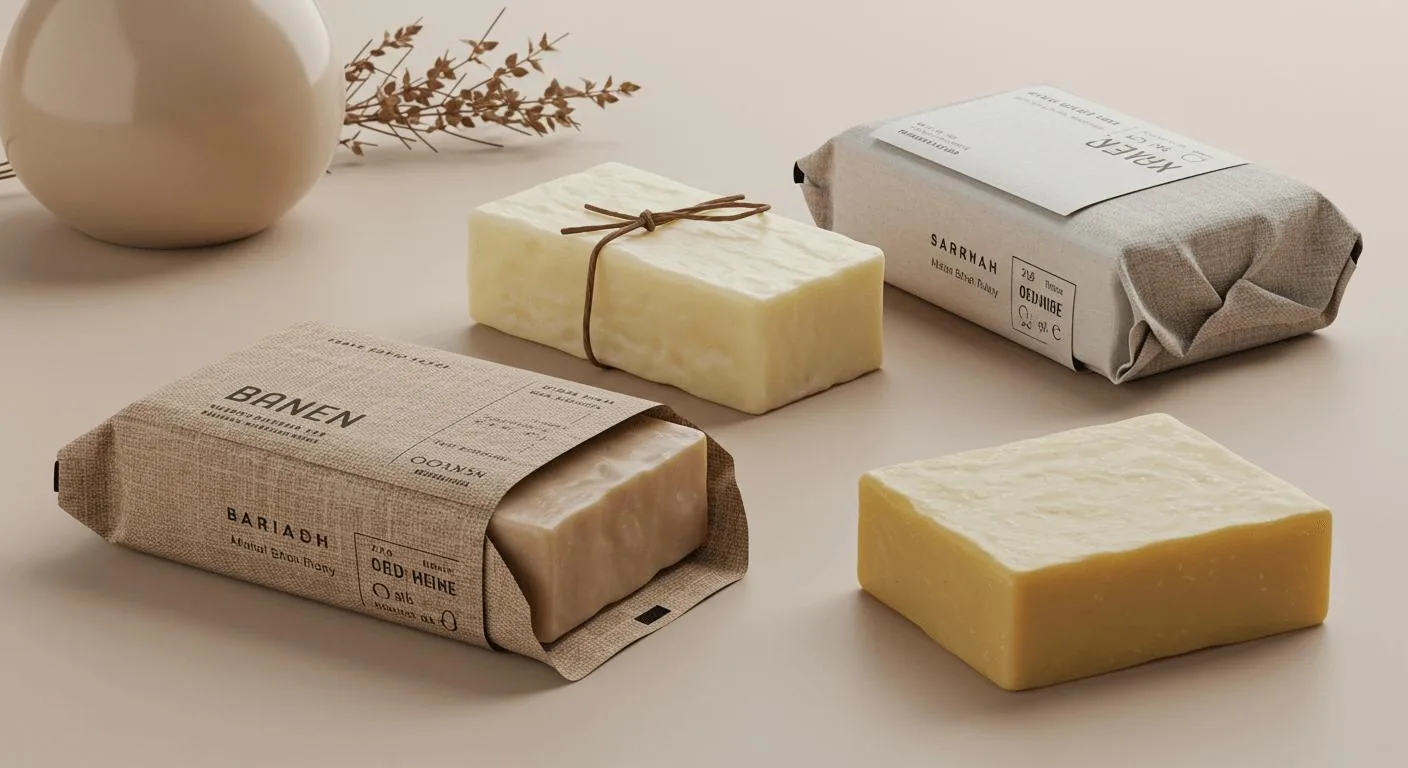
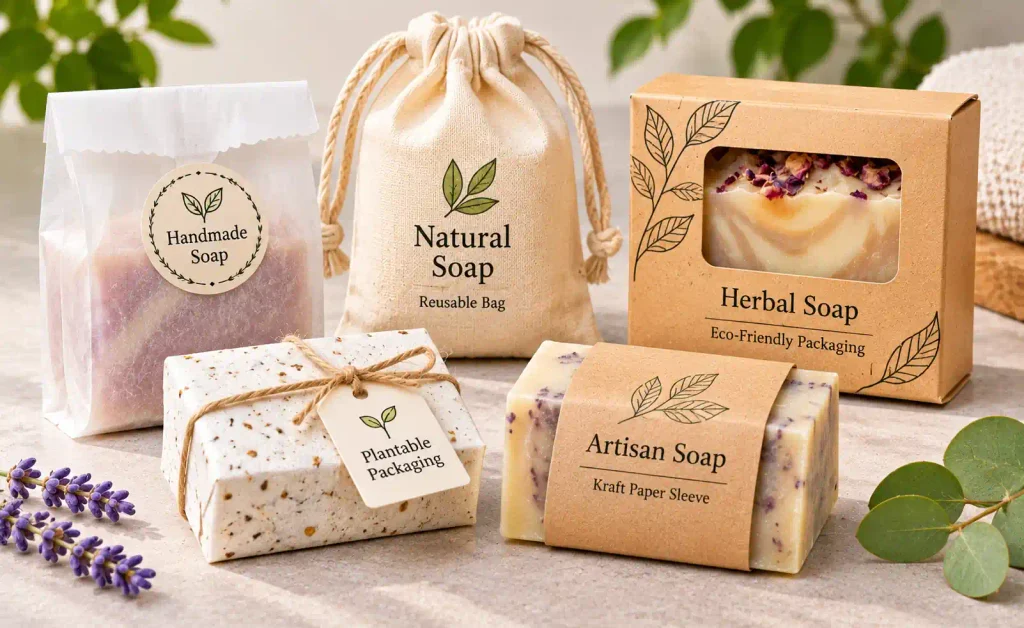
Kraft paper is an affordable option for everyday wrapping of dry, handmade soap bars. Its natural brown color works particularly well with botanical, rustic, and minimalist designs. A simple paper label or rubber-stamped logo can make the wrapping look professional without complicated printing.
For a cleaner finish, fold the paper neatly around the soap and secure it with a narrow paper band. Choose uncoated paper where practical and keep the soap dry before wrapping.
Best for: Everyday handmade soap packaging, craft fairs, and budget-friendly wrapping.
2. Recycled Cardboard Soap Boxes
Recycled cardboard boxes offer more protection than a basic paper wrap. They help prevent surface scratches, protect decorative soap designs, and provide space for product information. Small folding cartons are especially useful for handmade soap businesses that sell in retail stores or ship products to customers. Choose appropriately sized boxes to avoid unnecessary material and add simple printing instead of decorative plastic lamination.
Best for: Retail soap bars, online orders, and small soap brands.
3. Minimalist Paper Sleeves and Belly Bands
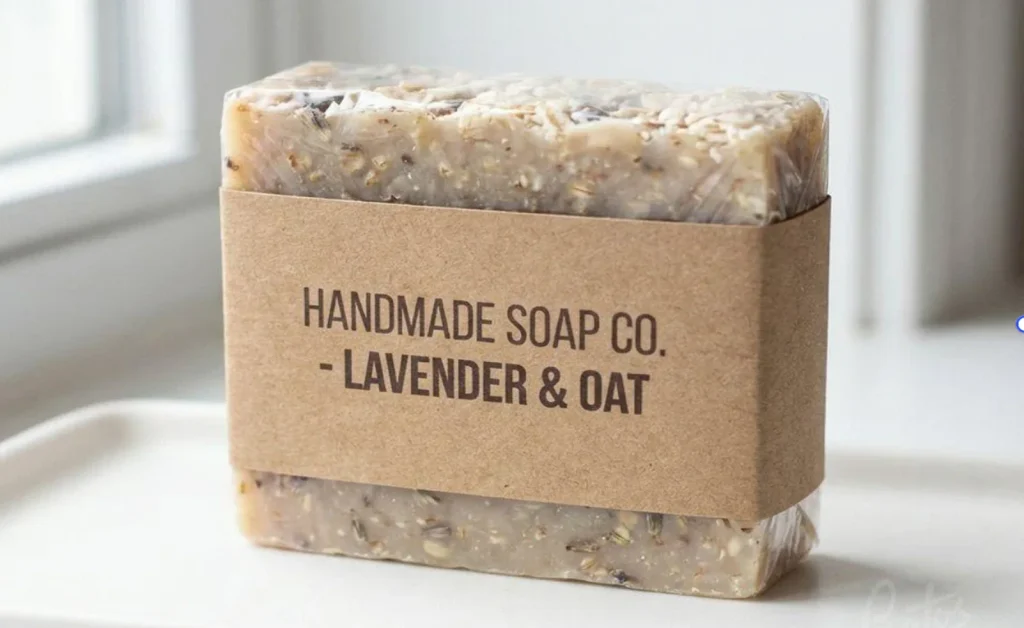
A paper sleeve, also called a belly band, wraps around the middle of a soap bar rather than covering it completely. It leaves the soap’s color, shape, and texture visible while providing space for branding. Unlike full kraft paper wraps, paper sleeves use less material and allow customers to see more of the soap. They work particularly well for handmade bars with swirls, botanical patterns, or layered colors. Because the soap remains exposed, this option is better for clean, dry retail displays than for dusty storage or unprotected shipping.
Best for: Minimal-material retail packaging and artisan soap displays.
4. Glassine Paper Bags
Glassine is a smooth, translucent paper that creates a neat presentation for small soap bars. Its semi-transparent appearance allows some of the soap’s color to show through without using a conventional clear plastic bag. Glassine bags can be paired with a paper sticker or simple printed label. However, not every glassine product has the same coating or disposal requirements, so check the supplier’s specifications before making recycling or compostability claims.
Best for: Small handmade soaps, sample bars, and minimalist packaging.
5. Plantable Seed Paper Packaging
Seed paper offers a creative alternative to ordinary decorative wrapping. It contains embedded seeds that may grow when the paper is planted under suitable conditions. Use seed paper for outer sleeves, tags, or gift messages rather than relying on it as the main protective layer. Include clear planting instructions and choose seeds suitable for the intended region. For USA customers, avoid seed mixes that could introduce invasive plants.
Best for: Gift soaps, special collections, and nature-inspired brands.
6. Reusable Cotton or Muslin Bags
Reusable cotton bags provide a soft, natural-looking presentation for handmade soap. Customers can reuse them for storing small accessories or other dry items after removing the soap. Plain muslin bags can be customized with a fabric tag or a small printed logo. However, reusable fabric packaging requires more material than a simple paper band, so its environmental value depends partly on whether customers actually reuse it.
Best for: Handmade soap gifts and reusable packaging collections.
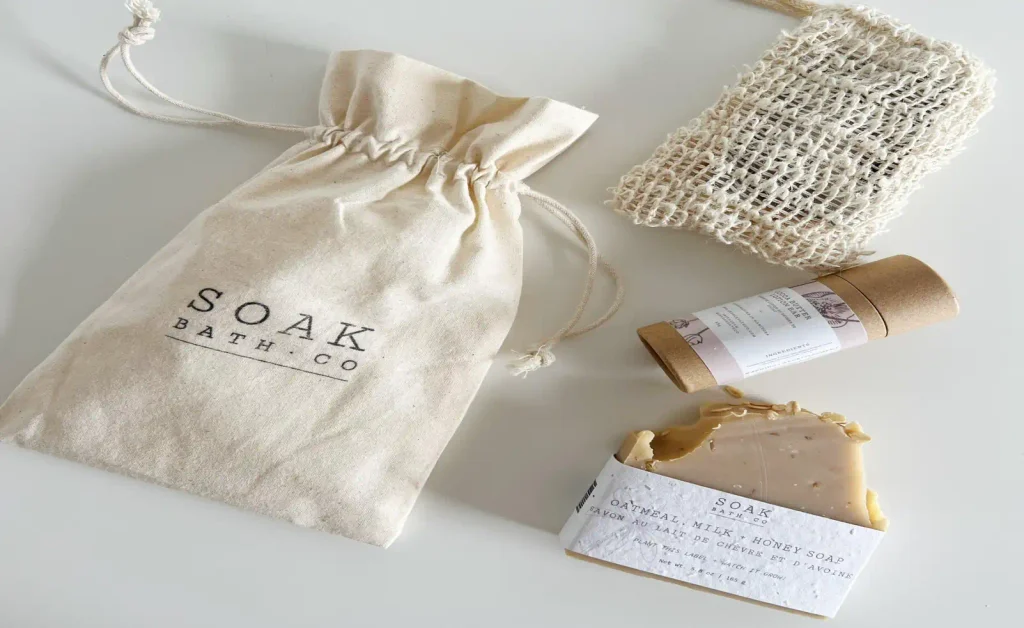
7. Recycled Paper Soap Pouches
Recycled paper pouches offer a lightweight alternative to cardboard boxes. Flat or gusseted designs can accommodate different soap sizes, while a folded top and paper label create a tidy finish. Choose a pouch with enough strength to resist tearing during handling. For soaps containing surface oils or moisture, test the paper before use because ordinary recycled paper may stain or weaken.
Best for: Small soap bars, lightweight packaging, and local markets.
8. Corrugated Cardboard Gift Boxes
Corrugated cardboard boxes are useful when several handmade soaps need to be packed together. Their fluted structure provides cushioning and strength, making them suitable for gift sets and shipping. Unlike personalized presentation boxes, corrugated boxes focus mainly on protecting products during transportation. A small box can hold multiple individually wrapped bars, with recycled paper dividers to prevent movement. Avoid oversized boxes and excessive filler.
Best for: Shipping, subscription boxes, and multi-soap gift sets.
9. Creative Soap Wrapping With Twine
Simple soap wrapping ideas can look distinctive with a small amount of natural twine. Wrap a dry soap bar in kraft paper, add a narrow paper label, and tie it with cotton or jute string. This DIY soap packaging idea works well for small batches because it doesn’t require specialized equipment. Unlike standard kraft wrapping, twine adds a handmade decorative finish suitable for gifts and craft displays. Keep the string secure but avoid wrapping it so tightly that it damages delicate soap edges.
Best for: Rustic soap packaging, handmade gifts, and craft markets.
10. Uncoated Printed Paperboard Cartons
Printed paperboard cartons are suitable for soap makers who want a consistent, recognizable appearance. Uncoated or lightly textured paperboard can support simple artwork, product names, and ingredient information. Try one or two ink colors, clear typography, and a restrained design instead of heavy decorative finishes. A well-designed carton can look premium without metallic films or plastic-coated surfaces.
Best for: Branded handmade soaps and retail collections.
11. Die-Cut Window Soap Boxes
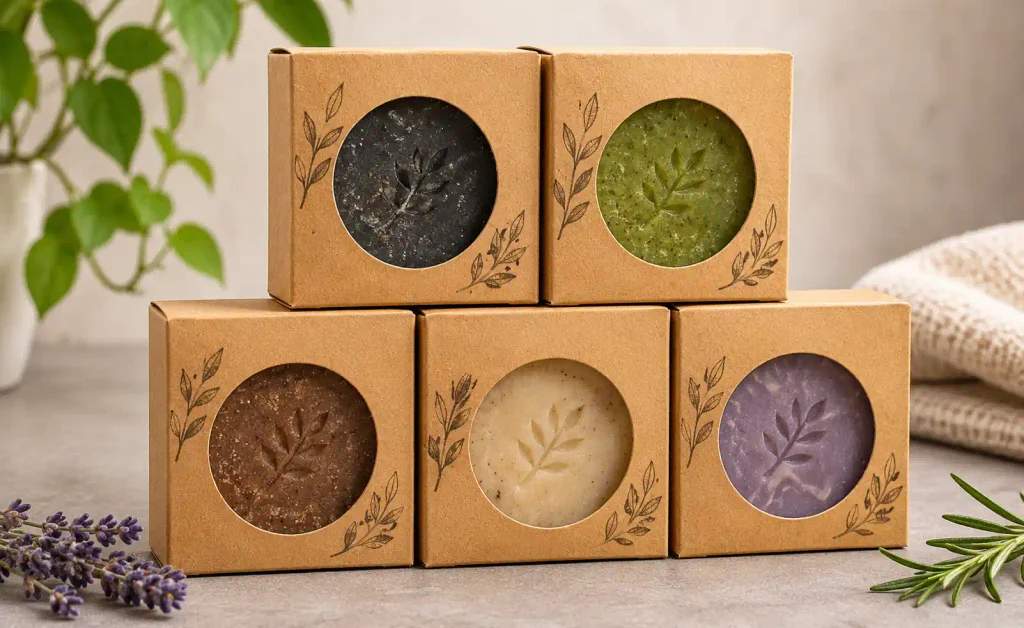
A die-cut window allows customers to see the soap without opening the box. For a lower-plastic design, leave the opening uncovered rather than adding a transparent plastic film. Keep the window small enough to maintain the box’s strength and prevent the soap from slipping out. An open window also exposes the product to dust and handling, so this design is most suitable for controlled retail displays.
Best for: Decorative handmade soaps and retail shelves.
12. Recycled Paper Gift Wrap
Recycled wrapping paper is a flexible option for homemade soap packaging. Unlike plain kraft wraps used for everyday sales, decorative recycled gift wrap focuses on seasonal presentation and special occasions. Choose printed patterns, botanical illustrations, or simple colors that complement the soap. Paper stickers or belly bands can secure the wrapping without adding excessive decoration.
Best for: Holiday gifts, wedding favors, and seasonal handmade soap collections.
13. Botanical-Inspired Soap Packaging
Botanical packaging uses nature-inspired illustrations, earthy colors, and simple materials to complement handmade soaps. Lavender, rosemary, leaves, and floral artwork can be printed on kraft sleeves or recycled paperboard cartons. For a cleaner and more practical design, use botanical illustrations rather than attaching loose dried flowers. Real plant decorations can shed, collect dust, or become damaged during shipping.
Best for: Herbal soap collections and nature-inspired product designs.
14. Zero-Waste-Inspired Soap Packaging
One of the simplest zero-waste soap packaging ideas is to reduce the amount of packaging used. Unlike other ideas focused on specific materials or decorative styles, this approach focuses on avoiding unnecessary packaging altogether.
A single recycled paper band may be enough for a dry soap bar sold directly at a local market. For products that need additional protection, use a fitted paperboard box instead of multiple decorative layers. The goal is to minimize waste without compromising product cleanliness or protection. Packaging should only be described as zero-waste when the claim can be substantiated.
Best for: Low-waste soap brands and local handmade soap sales.
15. Personalized Handmade Soap Gift Boxes
Personalized soap gift boxes combine practical packaging with thoughtful presentation. A recycled paperboard box can hold multiple soap bars, while paper dividers keep different scents or designs separated. Unlike corrugated shipping boxes, personalized gift boxes prioritize presentation, branding, and the recipient’s experience. Add a short message, printed gift label, or simple product information card. Choose a box that fits the contents closely and avoid unnecessary plastic inserts or decorative filler.
Best for: Wedding favors, holiday gifts, and premium handmade soap gift sets.
Which Eco-Friendly Soap Packaging Material Is Best?
The best material depends on whether the soap will be displayed, gifted, stored, or shipped. Some packaging options prioritize appearance, while others provide better protection.
| Packaging material | Main advantage | Best use | Important limitation |
| Kraft paper | Simple and lightweight | Dry soap wraps | Limited moisture protection |
| Recycled cardboard | Better structural protection | Retail soap boxes | Needs appropriate sizing |
| Paper sleeves | Uses less material | Local displays | Leaves soap exposed |
| Glassine paper | Smooth, translucent finish | Samples and small bars | Check coatings and disposal requirements |
| Seed paper | Plantable decorative element | Gift tags and sleeves | Not ideal as primary protection |
| Cotton bags | Reusable presentation | Gift packaging | Environmental benefit depends on reuse |
| Corrugated cardboard | Stronger shipping protection | Gift sets and deliveries | Bulkier than paper wraps |
For most dry handmade soap bars, kraft paper wraps and recycled paperboard boxes are practical starting points. Paper sleeves are useful when minimizing material matters most, while corrugated boxes are better suited to shipping multiple bars.
How to Package Handmade Soap Step by Step
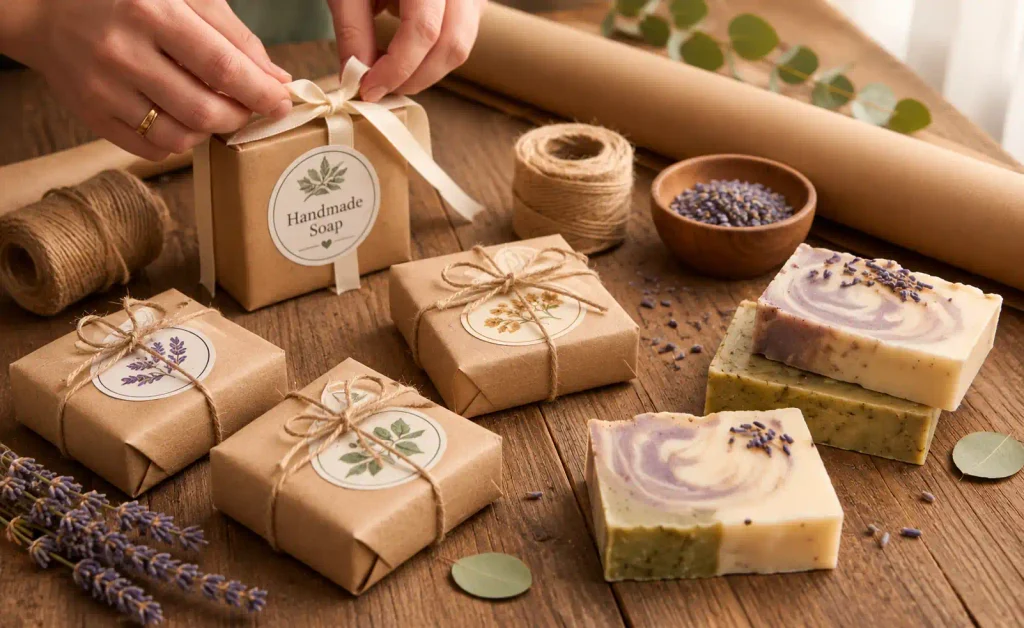
You don’t need expensive equipment to create attractive handmade soap packaging. Start with the soap itself and choose materials that suit its shape, condition, and intended use.
- Prepare the soap. Make sure the soap is properly cured or set according to its formulation and suitable for packaging. Cold-process soap should complete its required curing period before final wrapping.
- Measure the bar. Record its length, width, and height to choose correctly sized wrapping paper, sleeves, or boxes.
- Choose the material. Use kraft paper for simple wraps, recycled cartons for retail protection, or corrugated boxes for shipping.
- Wrap or box the soap. Keep folds neat, avoid excessive material, and secure the package with a paper label or band.
- Add the necessary information. Include appropriate product identification, business details, and other labeling information required for the product’s classification and sales location.
- Test the finished package. Check whether the soap stays clean, the wrapping remains secure, and the packaging survives normal handling.
How to Choose the Right Soap Packaging Size
Measure the soap bar’s length, width, and height after it has reached its final size. Choose a box with enough internal clearance to fit the bar without squeezing or excessive movement. For paper wraps, allow extra material for folding and securing the ends. For paperboard cartons, check the manufacturer’s internal dimensions rather than relying on external measurements.
Before ordering packaging in bulk, make a sample and test it with an actual soap bar. This helps identify sizing problems and unnecessary empty space. For detailed measurement instructions, explore our length, width, and height dimensions guide on Search Packaging.
How to Choose Soap Packaging for a Small Business
The best soap packaging ideas for small businesses balance cost, protection, appearance, and waste reduction. A beautiful package is not useful if it tears easily or leaves the soap damaged.
Start with a few practical questions: Will the soap be sold locally or shipped? Does the bar have delicate decorations? Will customers need to see the product? Does the packaging have enough space for required information? For low-cost packaging, consider paper bands, kraft wraps, or simple folding cartons. For gift sets and online orders, prioritize boxes that provide better protection.
Affordable Soap Packaging Ideas for Small Businesses
Paper belly bands are often a low-material option because they cover only part of the soap. Kraft paper wraps are another practical choice for small batches, especially when printing is limited to a simple label. Folding cartons generally involve additional material, cutting, and assembly costs, but they provide more protection and space for branding. Reusable cotton bags may cost more per unit because of the fabric, stitching, and customization.
When comparing options, consider material quantity, printing, order volume, assembly time, and shipping protection. A cheaper wrap may not be the best overall choice if it allows products to become damaged. Exact costs vary by supplier and order quantity, so request comparable quotations before choosing packaging for a larger production run. For more guidance, explore custom packaging for small businesses and learn about custom packaging cost.
What About Moisture and Different Soap Types?
Not every handmade soap behaves the same way. Properly cured cold-process soap is generally easier to package in breathable paper than a bar that is still releasing moisture.
Some melt-and-pour soaps, especially glycerin-rich formulations, can attract moisture from humid air and develop surface droplets commonly called glycerin dew. These soaps may require a suitable moisture-barrier wrap rather than paper alone. Choose packaging based on the actual formulation and test it under expected storage conditions. A material should not be called eco-friendly simply because it looks natural if it fails to protect the product.
Are Biodegradable, Compostable, and Recyclable Soap Packaging the Same?
No. These terms describe different environmental characteristics.
Recyclable packaging can be collected and processed through an appropriate recycling system. Compostable packaging must break down under specified composting conditions. Biodegradable packaging can break down through biological processes, but the term alone does not establish how quickly or under what conditions that happens.
For USA businesses, the FTC Green Guides recommend clear, substantiated environmental claims rather than broad, unsupported statements such as “100% eco-friendly.”
Federal Trade Commission
Before describing packaging as recyclable or compostable, verify its complete material composition, including coatings, labels, and adhesives.
What Should You Include on Handmade Soap Packaging Labels?
Soap packaging should identify the product clearly and provide appropriate business and product information. However, labeling requirements in the United States depend on the product’s formulation, intended use, and marketing claims.
The FDA’s official soap guidance explains three important classifications:
- True soap: Products meeting the federal definition of soap and marketed only for cleansing generally fall under the Consumer Product Safety Commission (CPSC).
- Cosmetic soap products: Products marketed for benefits such as moisturizing or deodorizing may be classified as cosmetics and regulated by the FDA.
- Drug products: Products marketed to treat acne, kill germs, or prevent disease may be regulated as drugs, or as both drugs and cosmetics.
These classifications affect which labeling rules apply.
FDA+1
According to the CPSC soap labeling guidance, ordinary true soaps do not have specific CPSC soap-labeling requirements. However, products classified as hazardous substances under the Federal Hazardous Substances Act must carry applicable cautionary labeling.
U.S. Consumer Product Safety Commission+1
For cosmetic products, requirements can include product identity, net quantity, business information, and ingredient declarations. Sellers should check the applicable federal and state rules before printing labels.
Common Soap Packaging Mistakes to Avoid
Even attractive packaging can cause problems when the material doesn’t suit the product.
- Wrapping soap too early: Packaging soap before it is properly ready can trap unwanted moisture.
- Using too much material: Multiple wraps, ribbons, and oversized boxes create unnecessary waste.
- Choosing appearance over protection: Exposed soap may collect dust or become damaged during handling.
- Ignoring the full material composition: Plastic films, coatings, and adhesives can affect disposal options.
- Making unsupported environmental claims: Recyclable, compostable, and biodegradable claims need appropriate evidence.
- Forgetting shipping conditions: Packaging that works on a retail shelf may not protect soap during delivery.
Conclusion
Creative soap packaging doesn’t have to be expensive or complicated. Kraft paper wraps, recycled cardboard boxes, paper sleeves, and reusable fabric bags offer different ways to present handmade soap while reducing unnecessary packaging. The best eco-friendly packaging for handmade soap depends on the soap’s formulation, how it will be sold, and how much protection it needs. Start with a simple material, test its performance, and add design details that serve a clear purpose.
For more practical ideas on sustainable materials and packaging design, explore the guides on Search Packaging.
Frequently Asked Questions
What is the most eco-friendly packaging for soap?
For many dry soap bars, a recycled paper band or appropriately sized recycled paperboard box is a practical low-waste option. The best choice depends on protection needs, material sourcing, and disposal options.
How do you package handmade soap sustainably?
Allow the soap to become ready for packaging, choose a suitable low-waste material, use only the amount needed, and avoid unnecessary decorative layers. Test the finished package before selling.
What can I use instead of plastic to wrap soap?
Kraft paper, recycled wrapping paper, paper sleeves, and suitable glassine bags are alternatives for some soap formulations. Moisture-sensitive soaps may still need specialized barrier packaging.
Can handmade soap be wrapped in kraft paper?
Yes. Kraft paper works well for many properly cured, dry handmade soap bars. It may not be suitable for soaps that attract moisture or require a stronger protective barrier.
What is the cheapest way to package handmade soap?
Simple paper bands and basic kraft paper wraps are often among the most affordable options for small batches. Actual costs depend on paper quality, order quantity, printing, and labor.
Packaging Expert & Industry Writer