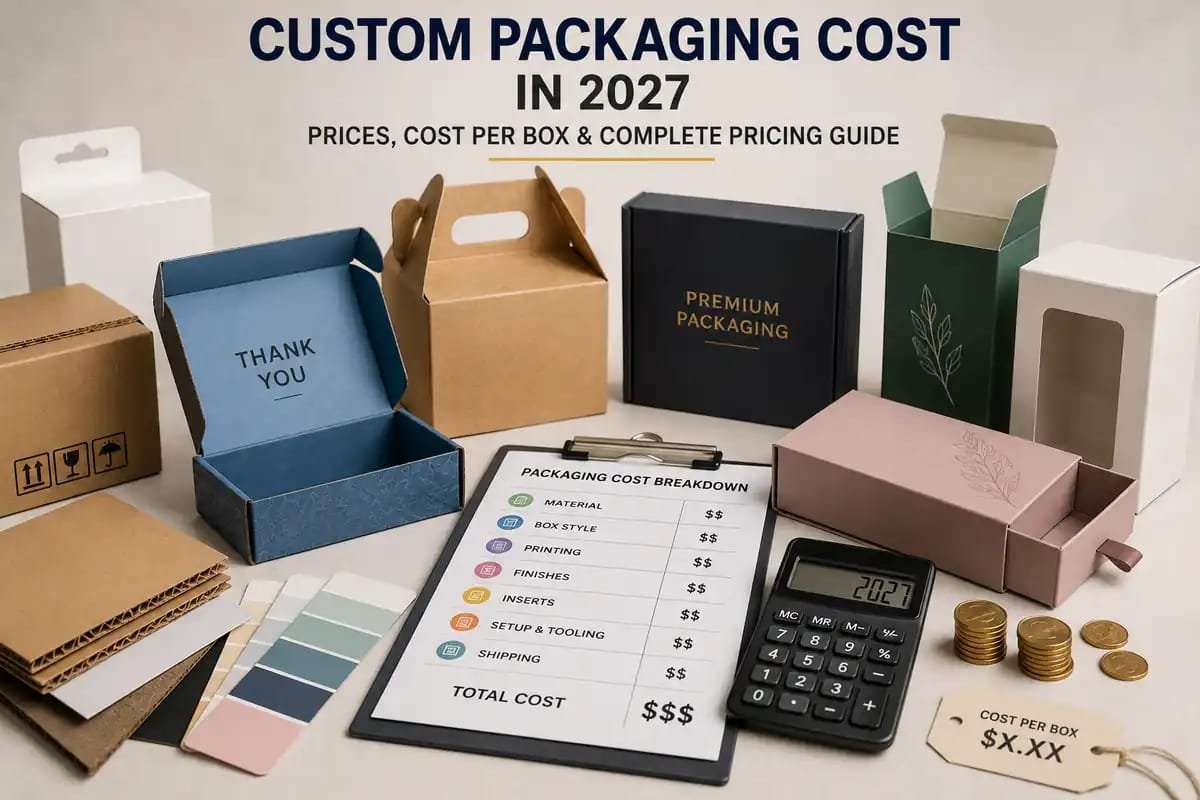
Custom packaging in 2027 can cost anywhere from under $1 per box for simple, high-volume printed cartons to $10 or more per box for premium rigid packaging with specialty finishes and inserts. There is no single fixed custom packaging price because the final cost depends on the box style, material, dimensions, printing method, order quantity, finishes, inserts, and shipping.For most businesses, order quantity has one of the biggest effects on the price per box. A short run usually costs more per unit because setup and production costs are spread across fewer boxes. Larger orders generally reduce the unit price.
This guide breaks down the major costs involved so you can estimate a realistic packaging budget before requesting a quote.
How Much Does Custom Packaging Cost in 2027?
The cost of custom packaging varies significantly by packaging type. A basic folding carton or kraft box is normally more affordable than a custom mailer or premium rigid box. Adding full-color printing, foil stamping, embossing, custom inserts, windows, or specialty coatings can increase the final price.
Here is a general pricing overview for budgeting purposes:
| Custom Packaging Type | Estimated Cost Per Box | Common Uses |
| Custom folding cartons | $0.30–$2.00+ | Cosmetics, food, supplements, retail products |
| Custom kraft boxes | $0.40–$2.50+ | Soap, candles, organic and handmade products |
| Custom corrugated boxes | $0.70–$4.00+ | E-commerce, shipping and heavier products |
| Custom mailer boxes | $1.00–$5.00+ | Subscription boxes, e-commerce and gift products |
| Custom printed retail boxes | $0.50–$4.00+ | Cosmetics, electronics, accessories and consumer goods |
| Custom rigid boxes | $4.00–$15.00+ | Jewelry, luxury cosmetics, gifts and premium products |
These are broad planning estimates rather than fixed market prices. Your actual custom packaging cost per box will depend on specifications, quantity, supplier, production location, and shipping.
For example, two brands ordering boxes of the same size may receive very different quotes if one chooses a simple one-color print while the other requires full-color printing, foil stamping, embossing, and a custom insert.
What Determines the Cost of Custom Packaging?
Several variables determine custom packaging pricing, but these are the factors that usually have the greatest impact.
1. Order Quantity
Quantity directly affects the unit cost. Packaging production involves setup expenses such as machine preparation, dielines, tooling, printing setup, and sampling. With a larger production run, these expenses can be distributed across more units.That means ordering 1,000 custom boxes will generally result in a lower price per box than ordering 100, although the total order value will be higher.
When comparing quotes, check both:
- Total order cost
- Price per unit
A cheaper total quote is not necessarily the most economical option if it has a much higher unit price.
How Does MOQ Affect Custom Packaging Prices?
MOQ, or minimum order quantity, is the smallest number of boxes a packaging supplier is willing to produce in one order.Some manufacturers specialize in low-MOQ custom packaging, while others are structured around larger wholesale production runs. Low quantities can be useful for startups, product launches, seasonal products, and businesses testing new packaging, but they often have a higher cost per box.
A simple example shows why:
Order Quantity| Typical Effect on Cost Per Box| Best Suited For
50–100 boxes| Highest unit cost| Samples, testing and very small businesses
250–500 boxes| Moderate unit cost| Startups and smaller product runs
1,000–5,000 boxes| Lower unit cost| Growing brands and regular inventory
10,000+ boxes| Strongest volume pricing| Established brands and wholesale production
The exact savings vary by manufacturer, box construction and printing method, so these quantities should not be treated as fixed pricing tiers.
2. Packaging Material
The material you select affects both performance and price. Lightweight paperboard can be economical for retail products, while corrugated board requires more material and provides greater protection for shipping. Premium rigid boxes use thicker board and more complex manufacturing, making them considerably more expensive.
Common materials include:
- Paperboard: Lightweight and commonly used for folding cartons.
- Kraft paperboard: Popular for natural-looking retail packaging.
- Corrugated board: Provides additional strength for shipping and e-commerce.
- Rigid chipboard: Used for high-end boxes that require a premium structure.
- Specialty and sustainable stocks: Pricing varies according to composition, availability, certification, and production requirements for example, businesses packaging food or moisture-sensitive products sometimes turn to barrier materials such as How to Create Mylar Bags for Effective Packaging, which come with their own cost considerations.
Choosing the most expensive material does not automatically produce the best packaging. The right option is the one that provides the required protection and presentation without unnecessary material cost.
3. Box Size and Custom Dimensions
Box dimensions influence how much material is required to manufacture each unit. Larger boxes generally require more board, but size alone does not determine the final price.Structural efficiency also matters.
An oversized box can increase:
- Material consumption
- Insert requirements
- Empty shipping space
- Storage requirements
- Freight costs
Creating custom-size boxes that closely fit the product can therefore reduce costs beyond the box itself. Before requesting a custom packaging quote, measure the product accurately and specify the required length × width × height. If several products will share one box, account for inserts, dividers, protective material, and the required clearance.
4. Box Style and Structural Complexity
A simple folding carton generally requires less material and assembly than an elaborate rigid box with multiple components. This makes the structure itself an important part of the custom box cost.
For example, pricing can vary between:
- Straight tuck-end boxes
- Reverse tuck-end boxes
- Auto-lock bottom boxes
- Corrugated shipping boxes
- Custom mailer boxes
- Sleeve packaging
- Two-piece boxes
- Magnetic rigid boxes
Features such as custom windows, handles, unusual die cuts, multiple panels, locking mechanisms, or complex folds can add material, tooling, production, or assembly costs.
5. Printing Method and Number of Colors
Printing can turn a plain box into branded packaging, but the production method should match the order size and design requirements.Digital printing can be suitable for shorter production runs because it typically requires less traditional printing setup. Offset printing can become more economical for larger volumes while providing high-quality reproduction. Flexographic printing is also widely used for corrugated packaging and high-volume applications.
The cost may change based on:
- One-color vs full-color printing
- Printing on one or both sides
- CMYK vs spot/PMS colors
- Coverage of the printed design
- Printing process
- Production quantity
A minimal logo printed in one color will generally cost less to produce than artwork covering the entire inside and outside of a box.
6. Finishes and Premium Add-Ons
Special finishes can improve shelf appeal and create a premium unboxing experience, but every additional production process should have a clear purpose.
Common upgrades include:
- Matte or gloss lamination
- Spot UV
- Foil stamping
- Embossing
- Debossing
- Window patching
- Soft-touch finishes
- Custom inserts
- Foam inserts
- Die-cut dividers
- Magnetic closures
A luxury rigid box with foil stamping, embossing and a fitted insert can therefore cost several times more than a basic printed carton of a similar size.For businesses working with a limited packaging budget, it is usually better to select one or two high-impact finishes rather than adding every available option.
Quick Custom Packaging Cost Formula
A useful way to understand your final packaging budget is:
Total Packaging Cost = Box Production + Printing + Finishes + Inserts + Setup/Tooling + Sampling + Freight/Shipping
To calculate the effective cost per unit:
Cost Per Box = Total Packaging Cost ÷ Number of Boxes Ordered
For example, if the complete production and delivery cost is $2,500 for 1,000 boxes, the effective packaging cost is $2.50 per box.This calculation is more useful than looking only at the manufacturer’s base box price because setup charges, inserts, finishing and freight can materially change the amount you actually pay.
Custom Packaging Costs by Material, Box Style, Printing and Finishes
Once you know the basic factors behind custom packaging pricing, the next step is to understand where the money actually goes. Material, box construction, printing, design, inserts and finishing can each change the final custom packaging cost per box. Some upgrades add only a small amount at scale, while others can substantially increase production costs.
Custom Packaging Cost by Material
Material is one of the biggest pricing variables because it affects the amount of board required, production process, strength and finished appearance.
| Packaging Material | General Cost Level | Common Applications |
| Paperboard | Low | Cosmetics, food, supplements and lightweight retail products |
| Kraft paperboard | Low–Moderate | Soap, candles, natural products and food packaging |
| Corrugated board | Moderate | E-commerce, shipping and heavier products |
| Rigid chipboard | High | Jewelry, cosmetics, electronics and luxury products |
| Specialty paper stocks | Moderate–High | Premium retail and branded packaging |
Paperboard and Folding Carton Cost
Paperboard is commonly used when a business needs lightweight, printable retail packaging without the cost of a heavier structure. Folding cartons are shipped flat and can be produced efficiently at scale, making them a practical option for products such as cosmetics, supplements, food items and small consumer goods.The final folding carton cost depends on board grade, thickness, box dimensions, printing coverage and finishing.
A standard printed folding carton will normally be more economical than a rigid box because it requires less material and fewer manufacturing and assembly steps.
Kraft Box Cost
Kraft packaging can be an economical option when the natural brown appearance fits the brand identity. Businesses can use simple black or single-color printing to create branded packaging without covering the entire surface with ink.
However, custom kraft box prices can increase when you add full-color printing, white ink, lamination, foil, windows or complex structures.Kraft should therefore be selected for its functional and visual qualities rather than on the assumption that every kraft box will automatically be cheaper.
Custom Corrugated Box Cost
Corrugated packaging uses fluted material between liner sheets to provide cushioning and structural strength. It is commonly used for shipping, e-commerce and products that need more protection during handling. If you’re comparing suppliers for this material, it helps to look at established manufacturers first see Top 10 Corrugated Box Manufacturers in USA for a starting shortlist.
The custom corrugated box price depends on factors such as:
- Box dimensions
- Flute type
- Board grade
- Product weight
- Print coverage
- Box style
- Order volume
Using a heavier board than the product requires can unnecessarily increase both material and shipping costs. The goal should be to select enough strength for the distribution environment without over-engineering the package.
How Much Do Custom Rigid Boxes Cost?
Rigid boxes sit at the premium end of custom packaging. They use thick paperboard or chipboard that is typically wrapped with printed or specialty paper instead of being folded from a single lightweight sheet.Their higher price reflects the additional material, wrapping, assembly and finishing involved.
Premium features such as magnetic closures, ribbons, foil stamping, textured paper and fitted inserts can push the custom rigid box cost higher.For this reason, rigid packaging makes the most financial sense when the product value and customer experience justify the additional cost, such as luxury cosmetics, jewelry, premium gifts and high-end electronics.
How Box Style Changes the Price
Two boxes made from the same material and with similar dimensions can still have different prices because their structures require different amounts of board, cutting, folding, gluing and assembly.
Folding Cartons
Folding cartons are generally among the most cost-effective choices for lightweight retail products. Straight tuck-end and reverse tuck-end structures are relatively simple to manufacture and can be stored flat before use.
Custom Mailer Boxes
Custom mailer boxes are popular for e-commerce and subscription products because they combine presentation with shipping protection.They usually use more corrugated material than a basic folding carton, so the custom mailer box cost can be higher. Printing inside the box, custom inserts and specialty coatings add further expense.
Custom Shipping Boxes
A standard corrugated shipping box is primarily designed for protection rather than presentation. Simple external logo printing can keep the price relatively low compared with a fully printed mailer box.For businesses shipping large volumes, even a small reduction in board usage or box dimensions can create meaningful savings across thousands of shipments.
Sleeve Packaging
Sleeves can be a cost-effective way to add branding around an existing tray, box or product. However, the total cost should include both the sleeve and any separate inner packaging required.
Two-Piece and Rigid Setup Boxes
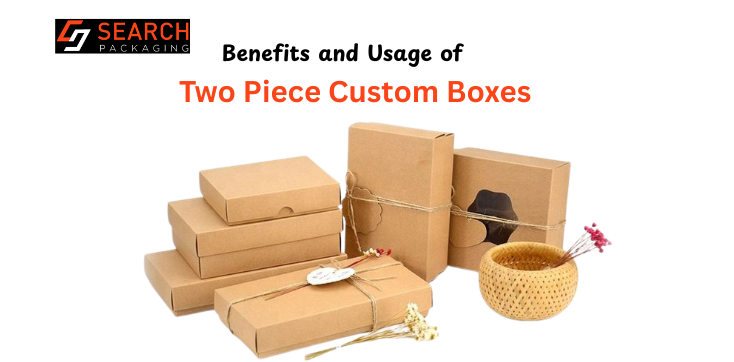
Two-piece boxes have separate bases and lids, while premium rigid setup boxes may involve wrapped board and manual or semi-automated assembly. More components generally mean more material and production work, resulting in a higher unit price, see Benefits and Usages of Two Piece Custom Boxes for a closer look at where this style makes sense.
How Much Does Custom Box Printing Cost?
There is no universal custom box printing cost because printing prices depend on the method, artwork, number of colors, coverage and production volume.
A supplier will typically consider:
Printing cost = setup requirements + ink/color requirements + print coverage + production quantity
Choosing the right printing method can prevent you from paying for production capabilities your project does not need.
Digital vs Offset Printing Cost
Digital Printing
Digital printing does not require traditional printing plates, making it particularly useful for short runs, prototypes and designs that change frequently.
It can be suitable for:
- Smaller quantities
- Product launches
- Seasonal packaging
- Multiple artwork versions
- Short production runs
The lower setup requirement does not mean digital printing is always cheaper. As volume increases, another printing method may offer a better unit cost.
Offset Printing
Offset printing involves more setup but can provide excellent color consistency and high-quality graphics across larger production runs.
It is commonly considered for:
- Large quantities
- Detailed artwork
- Premium retail packaging
- Consistent brand colors
- High-volume repeat orders
The initial setup can make short runs relatively expensive, but the price per printed box can become more competitive as quantities rise.
Flexographic Printing
Flexographic printing is widely used for corrugated packaging and high-volume production. It can be particularly cost-effective for simpler graphics and repeat orders once printing plates have been produced.The best printing method therefore depends on the design and volume rather than one method being universally cheaper.
Does Full-Color Printing Cost More?
It can, but the difference depends heavily on the printing process.A simple one-color logo can be an economical choice for corrugated or kraft boxes. Full-color graphics may require a different production process, additional preparation or greater ink coverage.
Businesses should also decide whether they genuinely need:
- Outside-only printing
- Inside and outside printing
- Full-surface artwork
- Spot/PMS colors
- Exact brand-color matching
Printing every available surface may look impressive, but it can increase the packaging budget without necessarily improving the customer’s experience.
CMYK vs PMS Printing: Which Costs More?
CMYK printing combines cyan, magenta, yellow and black to reproduce a wide range of colors. It works well for photographs, gradients and multi-color artwork.PMS (Pantone Matching System) uses specific spot colors and is useful when consistent brand-color reproduction is particularly important.PMS printing may introduce additional setup or ink requirements depending on the production method. Brands should choose it when exact color consistency provides enough value to justify the potential extra cost.
How Much Does Custom Packaging Design Cost?
The physical box is not always the only expense. Businesses without print-ready artwork may also need to budget for custom packaging design costs.
Design-related expenses can include:
- Graphic design
- Structural design
- Dieline creation
- Artwork preparation
- Prepress adjustments
- 3D mockups
- Physical prototypes
- Revisions
Some packaging manufacturers include basic dieline or design support with an order, while others charge separately. Ask what is included before comparing supplier quotes.A quote that appears cheaper can become more expensive once design, tooling and sampling fees are added.
Dielines, Tooling and Setup Costs
A dieline is the flat template showing where packaging will be cut, folded and glued. Custom structures may require a new cutting die or tooling before full production begins.These costs are generally one-time or setup-related expenses rather than recurring per-box charges, although supplier policies vary.
For example, if tooling costs $300:
- Across 100 boxes, it represents $3.00 per box.
- Across 1,000 boxes, it represents $0.30 per box.
- Across 10,000 boxes, it represents $0.03 per box.
This is another reason small custom packaging runs can have a much higher effective unit cost.
How Much Do Packaging Finishes Add to the Cost?
Finishing processes improve appearance, texture or durability. Each additional process can also add setup time and production cost.
| Packaging Finish | Typical Cost Impact | Main Purpose |
| Matte/gloss coating | Low–Moderate | Surface protection and appearance |
| Lamination | Moderate | Durability and premium feel |
| Spot UV | Moderate | Highlight selected design elements |
| Foil stamping | Moderate–High | Metallic or premium detailing |
| Embossing/debossing | Moderate–High | Raised or recessed texture |
| Window patching | Moderate | Product visibility |
| Soft-touch finish | Moderate–High | Premium tactile experience |
These levels are relative rather than fixed prices because the actual finishing cost depends on surface area, tooling, quantity and production method.
Foil Stamping
Foil stamping can highlight a logo, product name or small design feature without covering the entire package.Using foil selectively can provide a premium appearance while controlling costs better than applying it across large areas.
Embossing and Debossing
Embossing raises an element above the packaging surface, while debossing presses it inward. Both may require custom dies and additional production steps.Combining embossing with foil can create a luxury effect but also increases tooling and production costs.
Matte, Gloss and Soft-Touch Finishes
Matte and gloss treatments are widely used to change surface appearance and provide additional protection. Soft-touch finishing creates a more tactile premium surface but generally sits at a higher cost level.The right choice depends on the product positioning. Everyday retail packaging may not need the same finishing investment as luxury packaging.
How Much Do Custom Packaging Inserts Cost?
Custom inserts protect products, organize multiple items and improve presentation. Their cost depends on the material, shape and complexity.
Common options include:
- Folded paperboard inserts
- Corrugated inserts
- Dividers
- Foam inserts
- Molded pulp inserts
- Die-cut product holders
A simple paperboard divider is generally less expensive than precision-cut foam designed around several product components.Inserts can also save money indirectly. If an insert prevents damage or allows a smaller outer box to be used, the additional component may reduce product replacements or shipping costs.
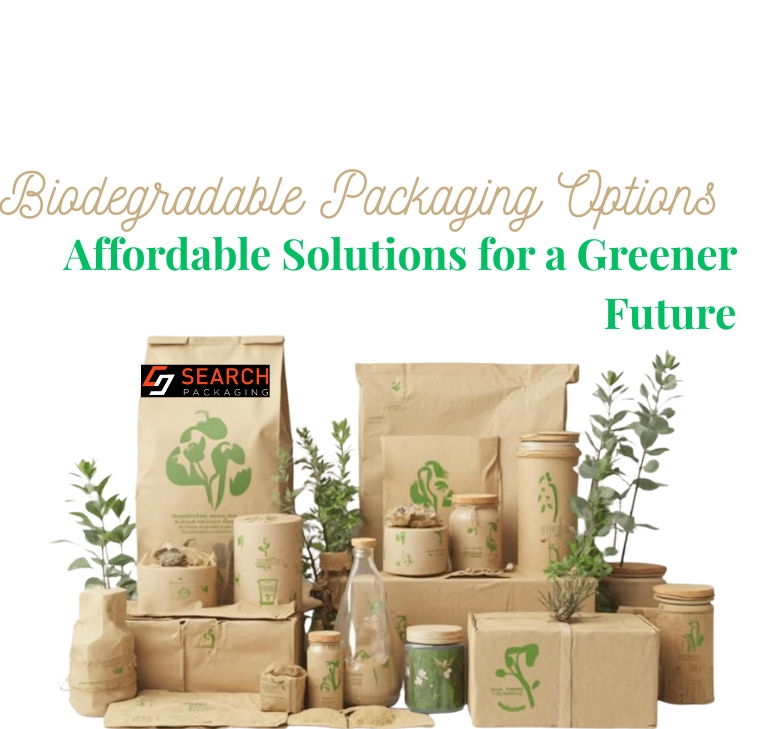
Sustainable Packaging: Is It More Expensive?
The cost of sustainable packaging depends on what “sustainable” means for the specific project. Recycled content, responsibly sourced fiber, lightweighting, recyclable structures and specialty compostable materials can all have different pricing implications.Some sustainable options may carry a price premium, particularly when materials are specialized or produced at lower volumes. Others can reduce costs by using less material or simplifying the package.
Businesses should evaluate sustainability alongside:
- Material quantity
- Recyclability
- Product protection
- Shipping weight
- Local recycling infrastructure
- Supplier availability
- Required certifications
A simple, right-sized recyclable paper-based package can sometimes be more economical than an elaborate package marketed as eco-friendly.
Custom Packaging vs Stock Packaging: Which Costs Less?
Stock packaging is usually cheaper upfront because standard sizes and structures are already produced at scale. Custom packaging requires specifications unique to your product or brand, which may introduce printing, tooling, design and setup expenses.However, the cheapest box price does not always produce the lowest overall packaging cost.
Custom sizing may reduce:
- Empty space
- Void fill
- Dimensional shipping charges
- Product movement
- Shipping damage
- Storage space
For a business shipping thousands of orders, these operational savings can offset part of the additional cost of customized packaging.
The better comparison is therefore not simply custom boxes vs standard boxes by purchase price. Businesses should compare the complete cost of packaging, storage, packing, shipping and product protection.The price quoted for manufacturing custom boxes is not always the amount you ultimately pay. Freight, shipping, storage, samples, rush production and other charges can change the final custom packaging cost. Before choosing a supplier, calculate the landed cost rather than comparing only the base price per box.
How Much Does Shipping Add to Custom Packaging Cost?
There is no standard shipping rate for custom packaging. Freight costs depend on where the boxes are manufactured, order size, package dimensions, total weight, delivery method and destination.Custom boxes can take up considerable space even when they are lightweight. This makes shipment volume particularly important.
Your final custom packaging shipping cost may be affected by:
- Order quantity
- Box dimensions
- Flat-packed or assembled construction
- Total shipment weight and volume
- Domestic or overseas manufacturing
- Ground, air or sea freight
- Delivery destination
- Fuel and carrier charges
- Customs and duties on imported packaging
- Required delivery speed
Whenever possible, request a quote that clearly separates production and delivery costs. A low manufacturing price can lose its advantage if freight is significantly higher.
Watch for Costs That May Not Be Included in the Box Price
Before approving an order, find out exactly what the supplier’s quote includes.
Additional charges can include:
| Potential Cost | What It Covers |
| Design fee | Creating or adjusting packaging artwork |
| Dieline fee | Preparing the structural template |
| Tooling/die fee | Creating equipment needed for custom cutting |
| Printing setup | Preparing plates, colors or machinery |
| Prototype/sample | Producing a physical box before the full run |
| Premium finishes | Foil, embossing, Spot UV, lamination and similar processes |
| Inserts | Custom holders, dividers, foam or molded components |
| Assembly | Folding, gluing or constructing complex packaging |
| Rush production | Manufacturing faster than the standard turnaround |
| Freight/shipping | Delivering the finished packaging |
| Duties/taxes | Applicable charges, particularly on imported orders |
| Storage | Holding inventory for future release |
Not every manufacturer charges these separately. The important point is to compare like-for-like quotes rather than assuming the lowest displayed price represents the complete order cost.
How Much Should a Small Business Budget for Custom Packaging?
A small business should work backward from the economics of its product instead of choosing packaging based only on appearance.
Start with five questions:
1. How much does the product sell for?
2. What level of protection does it need?
3. How many units are realistically required?
4. Which packaging features directly improve presentation or usability?
5. What is the complete delivered cost per packaged product?
For example, spending several dollars on premium rigid packaging may make sense for a high-value gift or luxury product but could make the margins of an inexpensive everyday product unsustainable.Small businesses can usually control costs by starting with a straightforward structure, right-sizing the box and investing in the branding elements customers are most likely to notice.
Is Custom Packaging Worth the Cost for Small Businesses?
It can be, but not every business needs premium packaging.
Custom packaging for small businesses can provide practical benefits when it:
- Fits the product better than stock packaging
- Reduces unnecessary void fill
- Protects products from damage
- Makes the brand easier to recognize
- Improves retail presentation
- Creates a more consistent customer experience
- Includes useful product or compliance information
The investment becomes harder to justify when expensive finishes or elaborate structures add little value to the product or customer experience.A growing business can start with affordable custom printed packaging and introduce more premium features as order volume and margins increase.
How to Reduce Custom Packaging Costs Without Sacrificing Quality
Reducing packaging cost does not have to mean switching to weak materials or removing all branding. In many cases, the best savings come from simplifying specifications and eliminating features that do not provide enough value.
1. Right-Size Your Packaging
Avoid using a larger box simply because it is already available. A right-sized structure can reduce board consumption, void fill, storage requirements and shipment volume.For e-commerce businesses, smaller dimensions may also help reduce dimensional-weight shipping charges.
2. Increase Order Quantity Carefully
Larger production runs generally provide a lower packaging cost per unit because setup expenses are distributed across more boxes.However, ordering 10,000 boxes instead of 1,000 is not a saving if thousands become obsolete.
Consider:
- Current sales volume
- Available storage
- Product redesign plans
- Seasonal artwork
- Regulatory changes
- Branding updates
The most economical quantity is the volume you can realistically use while the packaging remains current.
3. Simplify the Box Structure
Complex structures can require additional material, cutting, gluing and assembly.Ask whether a simpler tuck-end, mailer or folding structure can provide the same protection. Removing an unnecessary component can sometimes reduce costs without changing the customer-facing design significantly.The price quoted for manufacturing custom boxes is not always the amount you ultimately pay. Freight, shipping, storage, samples, rush production and other charges can change the final custom packaging cost. Before choosing a supplier, calculate the landed cost rather than comparing only the base price per box.
How Much Does Shipping Add to Custom Packaging Cost?
There is no standard shipping rate for custom packaging. Freight costs depend on where the boxes are manufactured, order size, package dimensions, total weight, delivery method and destination.Custom boxes can take up considerable space even when they are lightweight. This makes shipment volume particularly important.
Your final custom packaging shipping cost may be affected by:
- Order quantity
- Box dimensions
- Flat-packed or assembled construction
- Total shipment weight and volume
- Domestic or overseas manufacturing
- Ground, air or sea freight
- Delivery destination
- Fuel and carrier charges
- Customs and duties on imported packaging
- Required delivery speed
Whenever possible, request a quote that clearly separates production and delivery costs. A low manufacturing price can lose its advantage if freight is significantly higher.
Watch for Costs That May Not Be Included in the Box Price
Before approving an order, find out exactly what the supplier’s quote includes.
Additional charges can include:
| Potential Cost | What It Covers |
| Design fee | Creating or adjusting packaging artwork |
| Dieline fee | Preparing the structural template |
| Tooling/die fee | Creating equipment needed for custom cutting |
| Printing setup | Preparing plates, colors or machinery |
| Prototype/sample | Producing a physical box before the full run |
| Premium finishes | Foil, embossing, Spot UV, lamination and similar processes |
| Inserts | Custom holders, dividers, foam or molded components |
| Assembly | Folding, gluing or constructing complex packaging |
| Rush production | Manufacturing faster than the standard turnaround |
| Freight/shipping | Delivering the finished packaging |
| Duties/taxes | Applicable charges, particularly on imported orders |
| Storage | Holding inventory for future release |
Not every manufacturer charges these separately. The important point is to compare like-for-like quotes rather than assuming the lowest displayed price represents the complete order cost.
How Much Should a Small Business Budget for Custom Packaging?
A small business should work backward from the economics of its product instead of choosing packaging based only on appearance.
Start with five questions:
1. How much does the product sell for?
2. What level of protection does it need?
3. How many units are realistically required?
4. Which packaging features directly improve presentation or usability?
5. What is the complete delivered cost per packaged product?
For example, spending several dollars on premium rigid packaging may make sense for a high-value gift or luxury product but could make the margins of an inexpensive everyday product unsustainable.Small businesses can usually control costs by starting with a straightforward structure, right-sizing the box and investing in the branding elements customers are most likely to notice.
Is Custom Packaging Worth the Cost for Small Businesses?
It can be, but not every business needs premium packaging.Custom packaging for small businesses can provide practical benefits when it:
- Fits the product better than stock packaging
- Reduces unnecessary void fill
- Protects products from damage
- Makes the brand easier to recognize
- Improves retail presentation
- Creates a more consistent customer experience
- Includes useful product or compliance information
The investment becomes harder to justify when expensive finishes or elaborate structures add little value to the product or customer experience.A growing business can start with affordable custom printed packaging and introduce more premium features as order volume and margins increase.
How to Reduce Custom Packaging Costs Without Sacrificing Quality
Reducing packaging cost does not have to mean switching to weak materials or removing all branding. In many cases, the best savings come from simplifying specifications and eliminating features that do not provide enough value.
1. Right-Size Your Packaging
Avoid using a larger box simply because it is already available. A right-sized structure can reduce board consumption, void fill, storage requirements and shipment volume.For e-commerce businesses, smaller dimensions may also help reduce dimensional-weight shipping charges.
2. Increase Order Quantity Carefully
Larger production runs generally provide a lower packaging cost per unit because setup expenses are distributed across more boxes.However, ordering 10,000 boxes instead of 1,000 is not a saving if thousands become obsolete.
Consider:
- Current sales volume
- Available storage
- Product redesign plans
- Seasonal artwork
- Regulatory changes
- Branding updates
The most economical quantity is the volume you can realistically use while the packaging remains current.
3. Simplify the Box Structure
Complex structures can require additional material, cutting, gluing and assembly.Ask whether a simpler tuck-end, mailer or folding structure can provide the same protection. Removing an unnecessary component can sometimes reduce costs without changing the customer-facing design significantly.
4. Limit Premium Finishes
Foil stamping, embossing, Spot UV and soft-touch finishes can create attractive packaging, but using several processes together increases production costs.Instead, choose the finish with the strongest visual impact.For example, a well-designed printed box with a small foil logo may achieve the required premium look without combining foil, embossing, Spot UV and specialty lamination.
5. Optimize Your Printing
Do not automatically assume every surface needs full-color printing.Depending on the brand, a simpler design using one or two colors may be highly effective on kraft or corrugated packaging. Printing only the exterior can also be more economical than printing both inside and outside.
6. Choose Material Based on Product Requirements
Over-engineering packaging increases costs.A lightweight retail item may not need heavy corrugated board, while a fragile product should not use thinner material simply to save a few cents.Choose board strength according to product weight, fragility, storage conditions and shipping requirements.
7. Design for Efficient Shipping and Storage
Packaging that ships flat generally occupies less space than fully assembled boxes. This can reduce freight and storage requirements.Businesses ordering large volumes should consider logistics during structural design rather than after production is complete.
Bulk Custom Packaging: When Does Ordering More Become Cheaper?
Bulk production usually lowers the custom packaging price per unit, but there is no universal quantity at which packaging suddenly becomes cheap.
The price curve depends on:
- Packaging structure
- Printing method
- Material
- Machine setup
- Tooling
- Finishing
- Supplier capabilities
Instead of asking only for a quote at one quantity, request several pricing tiers.
For example:
500 units → 1,000 units → 2,500 units → 5,000 units → 10,000 units
Comparing these tiers makes it easier to identify where meaningful economies of scale begin.Also calculate the additional inventory investment. A lower price per box is valuable only when the business can use the additional packaging.
Domestic vs Overseas Custom Packaging: Which Is Cheaper?
Overseas manufacturing may offer a lower factory price for certain high-volume orders, but factory price alone does not determine the cheapest option.
International orders can involve:
- Ocean or air freight
- Customs duties
- Import taxes
- Longer lead times
- Larger MOQs
- Currency fluctuations
- Warehousing requirements
- Additional inventory risk
Domestic production may have a higher manufacturing price but offer shorter lead times, easier communication and lower freight requirements for some orders.Compare suppliers using landed cost per box, not factory price alone.
How to Compare Custom Packaging Quotes
When collecting quotes, provide every supplier with the same specifications. Otherwise, you may end up comparing different materials, printing methods or quality levels.
Your request should specify:
- Box style
- Internal dimensions
- Material
- Board thickness or strength requirement
- Order quantity
- Printing colors
- Inside/outside printing
- Finishes
- Inserts
- Delivery location
- Required turnaround
- Whether samples are needed
Then ask each supplier to clarify what is included.
A useful comparison looks at:
Unit Cost + Setup + Tooling + Printing + Finishing + Inserts + Freight = Landed Packaging Cost
This provides a more accurate comparison than choosing a supplier based solely on the advertised custom box price.
Before Ordering Custom Packaging: Cost Checklist
- Confirm the exact internal box dimensions.
- Choose material based on product weight and protection needs.
- Request prices at several order quantities.
- Confirm the supplier’s MOQ.
- Check whether dieline creation is included.
- Ask about tooling and setup charges.
- Confirm the printing method and number of colors.
- Price premium finishes separately.
- Confirm the cost of inserts or dividers.
- Request a sample or prototype when necessary.
- Check production and delivery lead times.
- Ask whether shipping is included.
- Account for duties and taxes when importing.
- Calculate the final landed cost per box.
- Confirm that the quantity can be used before the design becomes outdated.
Final Takeaway: What Should You Expect to Pay for Custom Packaging in 2027?
There is no single price that applies to every custom box. In 2027, the final custom packaging cost will continue to depend primarily on material, size, box style, quantity, printing, finishes, inserts and delivery requirements.
Simple folding cartons ordered at volume can cost well below premium packaging on a per-unit basis, while complex rigid boxes with specialty finishes and fitted inserts can cost several dollars or considerably more per unit.For an accurate budget, do not focus only on the advertised box price. Calculate the complete landed cost per box, including production, setup, printing, finishes, inserts and shipping.The most cost-effective packaging is not necessarily the cheapest box. It is packaging that protects the product, supports the brand and meets shipping requirements without paying for unnecessary material or production processes.
Frequently Asked Questions About Custom Packaging Costs
How much does custom packaging cost per box?
Custom packaging can range from under $1 per box for relatively simple cartons produced at higher volumes to $10 or more for premium rigid packaging. The actual price depends on material, dimensions, quantity, printing, finishes, inserts and shipping. A supplier quote based on your exact specifications is necessary for accurate pricing.
How much do 100 custom boxes cost?
There is no fixed price for 100 custom boxes. Short production runs generally have a higher cost per unit because setup, tooling and production expenses are divided across fewer boxes. The box style, size, material and printing method can make a significant difference to the total.
How much do 500 custom boxes cost?
The cost of 500 custom boxes depends on their specifications. In many cases, 500 units will have a lower per-box price than 100 units because production setup costs are spread across a larger quantity. Ask for pricing at 500, 1,000 and 2,500 units to identify the best value for your project.
Is custom packaging more expensive than standard packaging?
Custom packaging usually has a higher upfront cost than stock packaging because it may require custom dimensions, printing, tooling and design work. However, right-sized custom packaging can potentially reduce void fill, storage space, product damage and shipping volume, which can offset part of the additional expense.
Why are custom boxes expensive in small quantities?
Small orders have fewer units over which to spread fixed expenses such as machine setup, dielines, tooling, sampling and printing preparation. As a result, the effective cost per box is usually higher for short runs.
What is the minimum order quantity for custom packaging?
There is no universal custom packaging MOQ. Some suppliers offer very small production runs or no fixed minimum, while others require hundreds or thousands of units. MOQ depends on the manufacturer, material, box style and printing process.
Does custom packaging get cheaper when you order in bulk?
Generally, yes. Bulk custom packaging usually has a lower unit cost because setup and manufacturing expenses are distributed across more boxes. However, businesses should balance volume discounts against storage costs and the risk of unused or outdated packaging.
What is the cheapest material for custom packaging?
There is no single cheapest material for every application. Lightweight paperboard and simple kraft structures can be economical for many retail products, while corrugated material may provide better value when shipping protection is required. The cheapest suitable option depends on the product’s weight, size and protection needs.
How much does it cost to print a logo on a box?
Logo printing cost depends on the printing process, number of colors, print area, material and quantity. A simple one-color logo can generally be produced more economically than full-surface, multi-color artwork, particularly on kraft or corrugated boxes.
Does full-color custom packaging cost more?
It can. Full-color artwork may require a different printing process, greater ink coverage or additional setup compared with simple one-color printing. The price difference becomes highly dependent on production volume and whether digital, offset or another printing method is used.
How much does custom packaging design cost?
Custom packaging design costs vary depending on whether you need only artwork placement or complete branding, structural engineering, dieline creation and prototypes. Some packaging manufacturers include basic design support with production, while specialist designers or agencies may charge separately.
Are custom mailer boxes expensive?
Custom mailer boxes generally cost more than simple folding cartons because they often use corrugated material and a more substantial structure. Size, printing coverage, inside printing, quantity and inserts can further affect the custom mailer box cost.
Are rigid boxes more expensive than cardboard boxes?
Usually, yes. Rigid boxes use thicker board and typically require additional wrapping, assembly and finishing. They are primarily used when premium presentation justifies the higher packaging cost.
Is sustainable packaging more expensive?
Not always. Some specialized sustainable materials can cost more because of material availability, certification or production requirements. Other approaches such as right-sizing, reducing material and using simple recyclable structures can potentially lower both packaging and shipping costs.
How can a small business reduce custom packaging costs?
Small businesses can reduce costs by right-sizing boxes, using simpler structures, limiting premium finishes, optimizing print coverage, selecting appropriate materials and comparing several quantity tiers. Ordering larger volumes can lower the unit price, but only when the business can realistically use the inventory.
What should I ask for when getting a custom packaging quote?
Provide the supplier with your box dimensions, style, material, quantity, printing requirements, finishes, inserts and delivery destination. Ask whether design, dielines, tooling, samples, setup, freight and taxes are included so you can calculate the true landed cost per box.