Choosing the wrong packaging carton can leave a product poorly protected, increase shipping costs, or make it difficult to display on store shelves. A cereal box, a shipping carton, and a milk carton may look similar, but they are made differently and serve different purposes. Understanding carton packaging helps businesses choose the right material, structure, and closure for their products without paying for features they do not need.
What Is Carton Packaging?
Carton packaging is a paper-based packaging format used to contain, protect, store, transport, or display products. Cartons are commonly made from paperboard or corrugated fiberboard, while cartons designed for liquids may contain additional barrier layers.
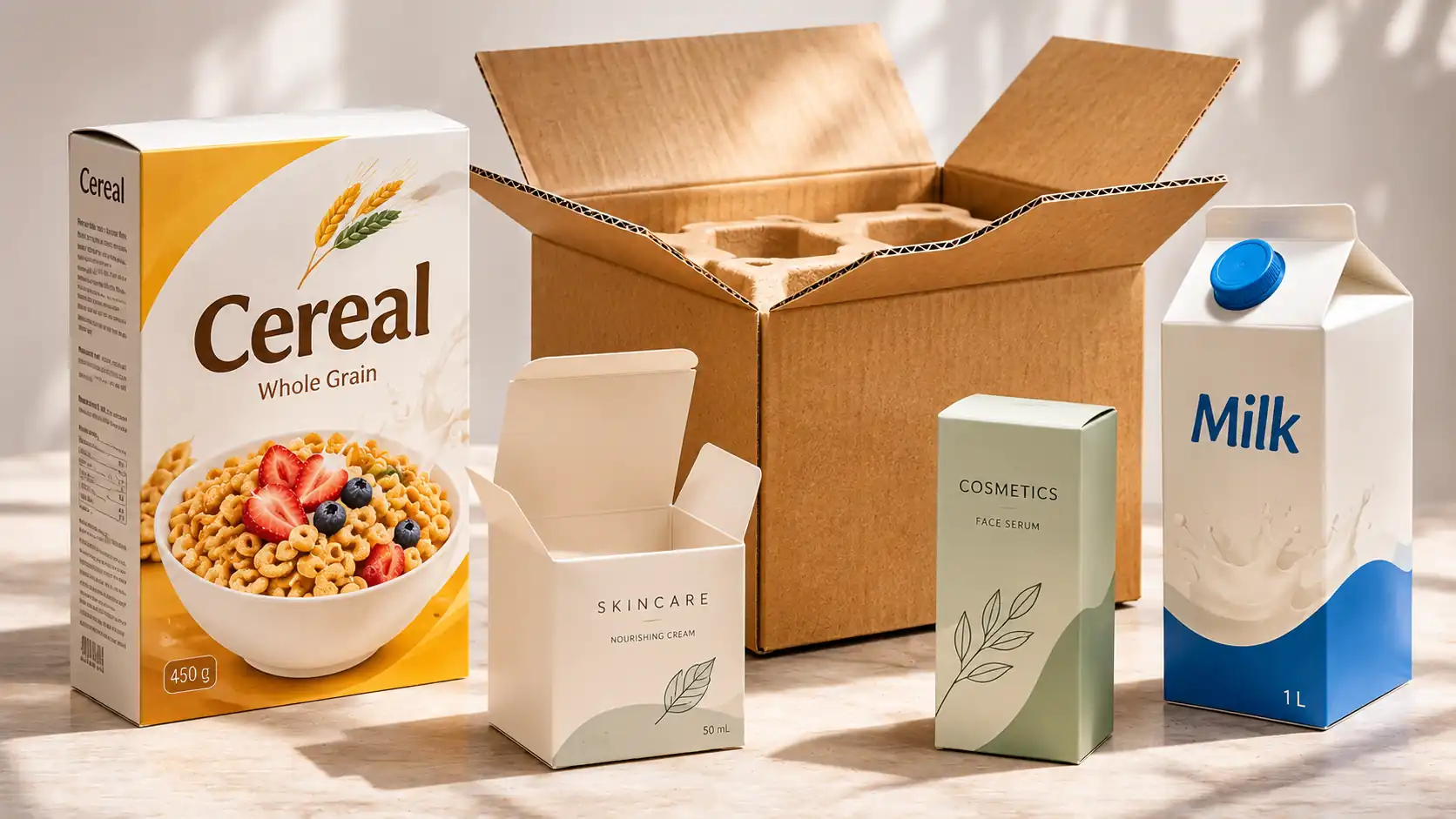
Everyday examples include cereal boxes, toothpaste cartons, corrugated shipping boxes, and milk cartons. The term carton is broad, so the material and construction matter more than the name alone.
Folding cartons are generally made from a single sheet of paperboard that is cut, creased, and folded into shape. Corrugated cartons use a fluted paper layer for added strength, while liquid cartons are engineered to prevent leakage and protect their contents.
What Are the Main Types of Carton Packaging?
The main types of carton packaging include folding cartons, corrugated cartons, and liquid packaging cartons. Each type has a different construction and is designed for specific product requirements.
1. Folding Carton Packaging
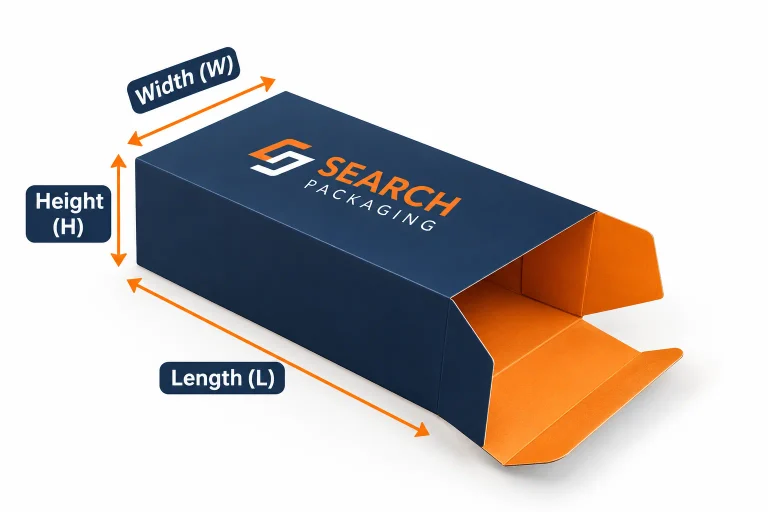
Folding cartons are lightweight paperboard boxes commonly used for retail products. They are usually printed, die-cut, creased, and glued during manufacturing, then supplied flat for storage and assembly.
Common applications include cereal, toothpaste, cosmetics, medicines, and small electronics accessories. Their smooth printable surfaces make them suitable for product information, branding, and retail displays.
For example, a cereal box is typically a folding carton made from paperboard. Its dimensions and structure are designed around the cereal bag and the amount of shelf space available. You can explore these measurements in our guide to cereal box dimensions and standard packaging sizes.
2. Corrugated Carton Packaging
Corrugated cartons are made from corrugated fiberboard, which typically has a fluted paper layer between flat liner sheets. This structure provides strength and cushioning for products during handling, stacking, and transportation.
These cartons are commonly used for e-commerce deliveries, household appliances, bulk products, and shipping multiple retail packages together. A business might place several individual folding cartons inside one corrugated shipping box to protect them during distribution.
Corrugated packaging can be produced in different board strengths and flute configurations. The right specification depends on the product’s weight, fragility, stacking requirements, and shipping conditions.
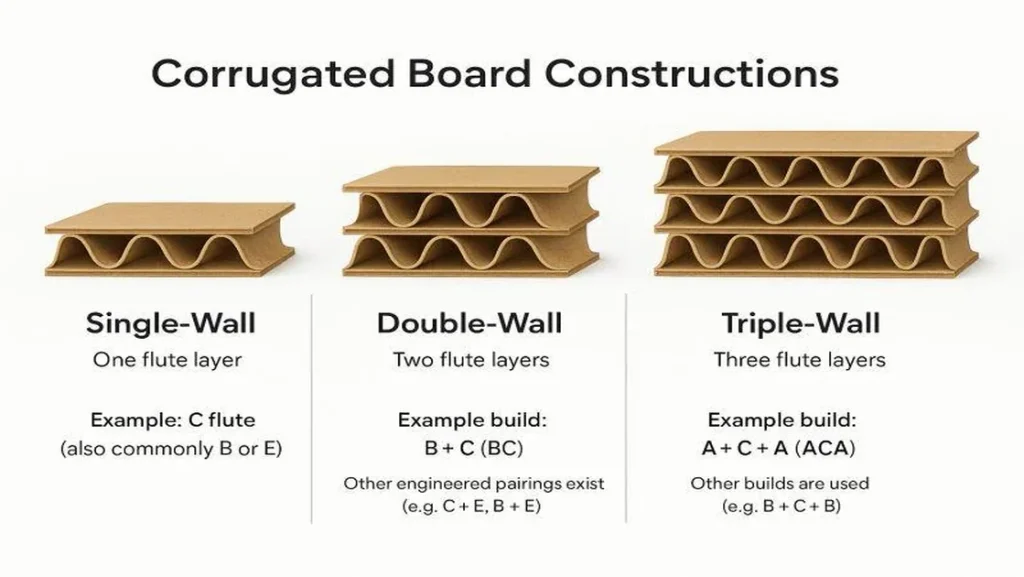
Corrugated cartons are available in different wall constructions, including single-wall, double-wall, and triple-wall boards. Single-wall cartons are commonly used for everyday shipping, while double-wall and triple-wall constructions may be selected for heavier products, demanding stacking conditions, or additional protection.
3. Liquid Carton Packaging
Liquid cartons are designed to hold products such as milk, juice, soup, and other beverages. Liquid cartons use specialized barrier layers to resist moisture, prevent leakage, and protect their contents from external conditions. Depending on the product and filling method, these structures may combine paperboard with polymer coatings and, in some aseptic formats, aluminum foil to help maintain product quality and shelf life.
The two main liquid carton formats are:
- Gable-top cartons: Commonly used for refrigerated milk, cream, and juice. They typically have a folded, peaked top.
- Aseptic cartons: Used for shelf-stable products such as juice, milk, and soup. They use a multilayer construction and an aseptic filling process to help preserve suitable products without refrigeration before opening.
Not every liquid carton has the same construction. The Carton Council distinguishes gable-top and aseptic cartons by their materials and intended applications.
Carton Packaging Types at a Glance
| Carton Type | Main Material | Common Uses | Main Advantage |
| Folding carton | Paperboard | Cereal, cosmetics, medicines | Lightweight and printable |
| Corrugated carton | Fluted corrugated fiberboard | Shipping, appliances, e-commerce | Stronger transport protection |
| Gable-top carton | Barrier-coated paperboard | Refrigerated milk and juice | Liquid containment |
| Aseptic carton | Multilayer paperboard structure | Shelf-stable beverages and soups | Barrier protection for suitable products |
What Are the Common Types of Folding Cartons?
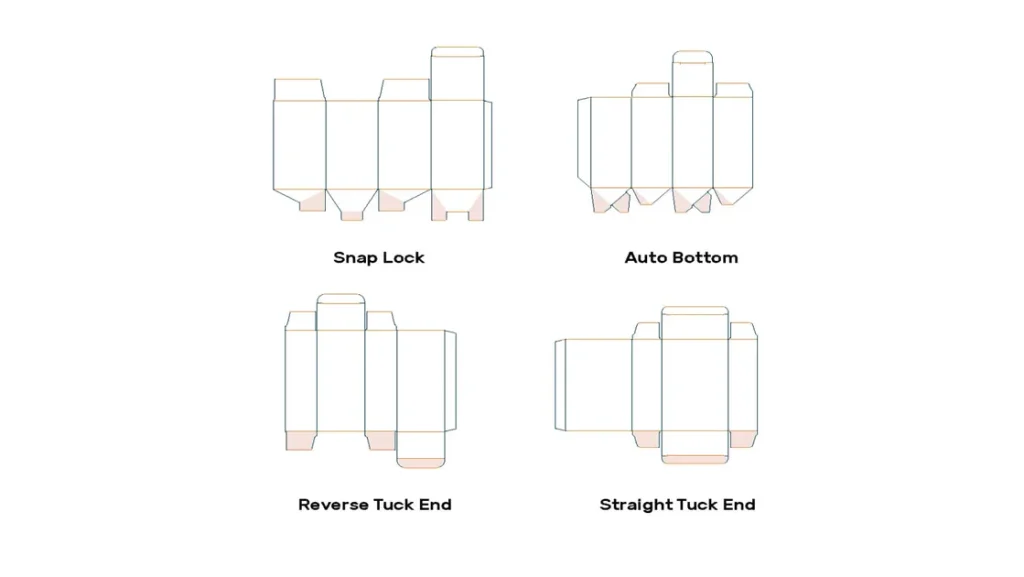
Folding cartons come in several styles. Their main differences involve how the top and bottom close, how quickly they can be assembled, and how much support they provide.
Straight Tuck End Cartons
Straight tuck end cartons have top and bottom tuck flaps that close in the same direction. They create a neat appearance and are commonly used for cosmetics, personal care products, and lightweight retail items.
Reverse Tuck End Cartons
Reverse tuck end cartons have top and bottom flaps that close in opposite directions. They are commonly used for small, lightweight products such as pharmaceutical cartons, cosmetics, and personal care items.
Auto-Bottom Cartons
Auto-bottom cartons have a pre-glued base that opens into position when the carton is erected. This reduces manual assembly time and provides a stable base for products that need more support.
They are particularly useful when packing efficiency matters, although their glued base may make them more expensive than simpler tuck-end structures.
They are useful for products such as bottles, jars, and certain packaged foods, provided the board and closure are specified for the product’s weight.
Snap-Lock Bottom Cartons
Snap-lock bottom cartons have base flaps that fold and interlock during assembly. They provide a secure bottom without requiring a pre-glued automatic base, although assembly usually takes more steps.
They are often used when additional bottom support is needed and manual setup is acceptable. Compared with auto-bottom cartons, snap-lock designs generally require more manual assembly but can offer a practical bottom closure without a pre-glued base.
Seal-End Cartons
Seal-end cartons use glued or otherwise sealed end closures rather than simple reusable tuck flaps. They are suitable for automated packing operations and products requiring a more secure closure.
The Paperboard Packaging Council identifies tuck-end and automatic-bottom designs among common folding-carton structures, with different styles suited to different product and assembly requirements.
What Materials Are Used in Carton Packaging?
The most common carton packaging materials are paperboard and corrugated fiberboard.
Paperboard is used for lightweight retail cartons because it can be folded, printed, and cut into different shapes. Common grades include solid bleached sulfate (SBS), recycled paperboard, and kraft-based paperboard.
Corrugated fiberboard is used when greater strength and cushioning are required. Its fluted structure helps cartons resist compression and absorb some handling impacts.
Liquid packaging uses specially designed paperboard with polymer barrier layers and, in some aseptic formats, a thin aluminum layer. These materials should not be treated as interchangeable with ordinary folding-carton board.
For more background on paper-based packaging materials, read our guide explaining whether cardboard is made from wood and how cardboard materials are produced.
| Material | Typical Characteristics | Common Applications |
|---|---|---|
| SBS Paperboard | Smooth, bright surface, excellent print quality | Cosmetics, pharmaceuticals, premium retail |
| Recycled Paperboard | Made using recovered paper fibers, often economical | General retail cartons, secondary packaging |
| Kraft Paperboard | Natural brown appearance, useful stiffness depending on grade | Natural-style packaging, retail boxes |
| Corrugated Fiberboard | Fluted structure designed for strength and cushioning | Shipping cartons, transit packaging |
What Are the Benefits of Carton Packaging?
Carton packaging offers several practical benefits, although the advantages depend on the material and structure selected.
- Product protection: Cartons help protect products from dust, surface damage, and routine handling. Corrugated structures provide additional cushioning and stacking strength for products moving through distribution channels.
- Easy printing and branding: Folding cartons provide surfaces for product names, instructions, ingredients, and branding.
- Efficient storage: Flat-packed cartons take up less storage space before assembly, helping businesses manage packaging inventory more efficiently and reducing the space required for unused packaging.
- Flexible design: Cartons can include windows, inserts, dividers, locking bases, and different opening styles.
- Recycling potential: Many paperboard and corrugated cartons are recyclable where accepted. Coatings, food contamination, and local recycling rules can affect acceptance.
A carton is not automatically sustainable simply because it contains paper. Material sourcing, total material use, coatings, product protection, and end-of-life handling all matter.
Where Is Carton Packaging Used?

Carton packaging is used across food, cosmetics, healthcare, electronics, retail, and e-commerce industries. The best format depends on whether the carton needs to display a product, contain a liquid, or protect goods during shipping.
| Industry | Common Carton Applications |
| Food and beverages | Cereal boxes, tea cartons, milk and juice cartons |
| Cosmetics | Skincare cartons, perfume boxes, makeup packaging |
| Healthcare | Medicine cartons and suitable medical product packaging |
| Electronics | Accessory cartons and corrugated shipping boxes |
| Retail | Gift cartons, household product boxes, display packaging |
| E-commerce | Corrugated shipping cartons and protective mailers |
For retail applications, some cartons also include tear-away or perforated panels. These can improve opening convenience or turn a shipping case into a product display. Our article on perforated packaging and its practical benefits explains how these features work.
How Are Folding Cartons Made?
Most folding cartons follow a straightforward manufacturing process. The exact steps vary depending on the carton material and design.
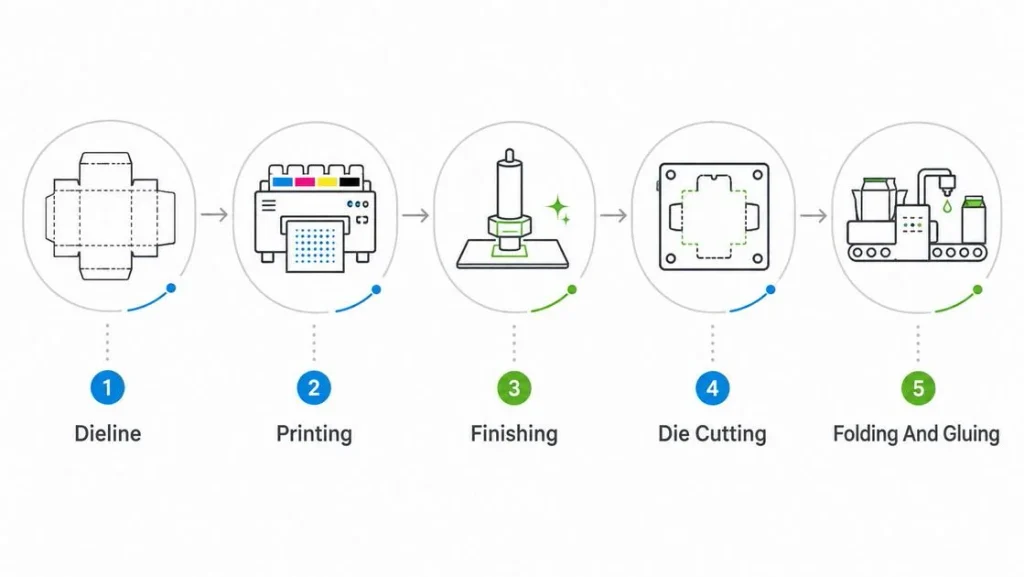
- Material selection: A suitable paperboard grade and thickness are chosen based on the product.
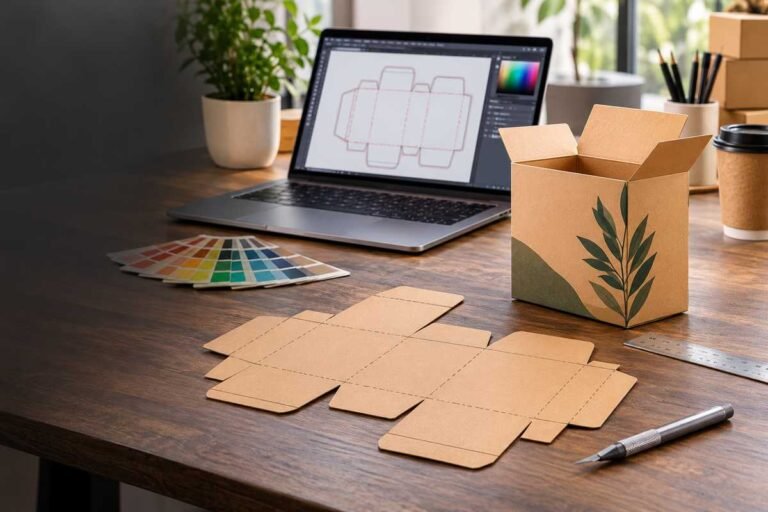
- Structural design: A dieline is prepared to define the panels, cut lines, fold lines, and glue areas.
- Printing: Product information and artwork are printed onto the board.
- Die-cutting and creasing: The board is cut and scored into the required carton shape.
- Folding and gluing: Selected panels are joined, and the cartons are prepared for packing.
Corrugated and liquid cartons use additional manufacturing processes suited to their materials and performance requirements. Depending on the packaging requirements, cartons may also receive coatings, laminations, or finishing treatments to improve appearance, durability, or resistance to moisture. After folding and gluing, finished cartons may be inspected for print quality, dimensions, closure performance, and structural consistency before being packed for delivery.
How to Choose the Right Carton Packaging
Start with the product’s needs rather than its appearance. A lightweight retail item may only require a folding carton, while a fragile product being shipped directly to customers may need a corrugated outer box and protective inserts.
Consider these factors before selecting a carton:
- Product weight and fragility: Choose a structure strong enough to support and protect the contents.
- Packaging purpose: Decide whether the carton is for retail display, storage, shipping, or liquid containment.
- Dimensions and fit: Allow enough space for the product, required inserts, and appropriate clearance.
- Closure and assembly: Select a tuck-end, lock-bottom, or sealed design based on packing speed and security.
- Printing and cost: Choose the necessary graphics and finishes without adding unnecessary production expense.
For custom packaging, the die line should be checked before production to confirm that the carton folds correctly and accommodates the product. Our guide to creating a packaging dieline explains how cut and fold lines define a box’s structure.
If budget is a major consideration, review the factors that affect custom packaging costs, including board material, dimensions, order quantity, printing, and finishing.
Conclusion
Carton packaging is available in different structures to meet retail, shipping, storage, and liquid-containment requirements. Folding cartons offer lightweight retail packaging, corrugated cartons provide additional strength for transportation, and liquid cartons use specialized barrier layers to contain beverages and other liquid products.
The right carton depends on product dimensions, weight, protection requirements, storage conditions, and packaging costs. Selecting a suitable structure helps businesses protect their products, improve presentation, and avoid unnecessary material use. At Search Packaging, we understand that choosing the right carton structure is an important step toward balancing product protection, packaging functionality, and cost efficiency.
Frequently Asked Questions
What is the difference between a carton and a box?
A carton is a type of packaging container, often made from paperboard or corrugated fiberboard. Box is a broader term that can describe containers made from cardboard, plastic, wood, or other materials.
What is carton packaging made of?
Most cartons are made from paperboard or corrugated fiberboard. Liquid cartons may also contain polymer coatings and other barrier layers.
What is the difference between folding cartons and corrugated boxes?
Folding cartons typically use a single layer of paperboard and are suited to retail packaging. Corrugated boxes use fluted material for added strength and are commonly used for shipping.
Can folding cartons be used for shipping?
Some folding cartons can be used for limited distribution applications, but many lightweight retail cartons need a protective corrugated outer box for parcel shipping.
Are carton boxes recyclable?
Many paperboard and corrugated cartons are recyclable where local facilities accept them. Liquid cartons and heavily coated packaging may require different recycling processes.
Packaging Expert & Industry Writer